






Let’s drop the idea that sports betting in Africa just popped up out of nowhere or got shipped in from somewhere else. The truth is, Africans have been placing bets, taking chances and rolling the dice both literally and figuratively for thousands of years. Betting has always been part of daily life, not just something that showed up when football got big or smartphones became common.
There’s something universal about making a wager. Maybe it’s the adrenaline that comes just before the outcome, maybe it’s the friendly rivalry or it’s simply hoping luck’s on your side. Whatever it is, Africans have known that thrill for millennia. Long before the days of the Premier League or apps lighting up phones, African communities already had their own games, bets and rituals that kept life competitive and lively. Then, when colonialism hit, new games like horse racing and cards joined the mix, adding to, rather than replacing, what was already there.
Fast forward to now, and you’ll find Africa’s gaming industry booming like nowhere else, which hit $17.63 billion in 2025 according to AllAfrica, and only picking up speed with platforms like Betway Tanzania being tailored to the African players. Betting in Africa isn’t some recent invention. It’s an old custom that found new life and a massive new audience thanks to technology.
The ancient roots had games of chance and strategy
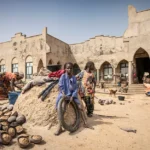
To really understand today’s betting scene in Africa, you have to go back, way back. Traditional African societies had lively gambling traditions long before any colonial ships landed. Everything kicked off with classics like Mancala and Abbia.

Mancala might just be one of the oldest board games on earth, with dozens of versions found across sub-Saharan Africa and even beyond. The game takes strategy, rhythm, quick calculation, and people placed real bets on who could win. There was also Abbia, a favourite especially in what’s now Cameroon. With Abbia, you’d toss carved wooden pieces from a bowl, wagering on which sides landed facing up; it sounds simple, but it was fiercely competitive.
The colonial period contained horse racing, card games and new rules
When Europeans arrived, they brought along their own favourite pastimes; card games, billiards and most importantly, horse racing. By the 1700s, Nigerians were already going to the track, and betting on horse races started sweeping across the continent. Even further back, in North Africa, the betting scene had already taken off by the 15th century under Ottoman rule.
Colonial governments had a love-hate relationship with gambling. They’d legalise betting in the forms they liked and try to ban or control the rest. But ordinary Africans kept playing their own games and placing informal bets; cards, dice, anything they had. In time, the imported and local traditions merged, creating something uniquely African.
Football changed everything
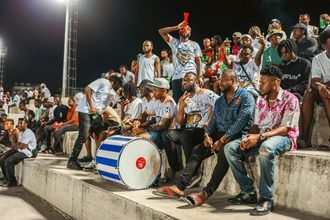
Ask just about anyone in sub-Saharan Africa about sport, and one answer comes up over and over: Football. The rise of football didn’t just change what people watched; it completely transformed betting culture as well. Suddenly, football pools were everywhere, with slips being traded in markets and chats about the weekend’s match odds filling up offices and street corners from Nairobi to Lagos to Dar es Salaam.
Radio and newspapers kept the hype alive, and fans followed European leagues; the English Premier League, La Liga and UEFA competitions, with unmatched devotion. For plenty of people, putting a small bet down wasn’t just about winning money. It was about joining a conversation, feeling part of a group and owning a bit of the excitement.
The mobile revolution and the numbers that tell the story
Then came the mobile phone. Suddenly, betting didn’t just go digital, it quite literally exploded. Africa’s young population, the surge in smartphones, and tools like Kenya’s M-Pesa meant that millions who’d never placed a bet before were suddenly in the game.
Now, Africa boasts over 440 million sports bettors, no other region comes close for pace of growth. The industry pulled in $17.63 billion in 2025 and is growing at a breakneck 17% per year from 2022 to 2027, faster than anywhere else. Take Nigeria. It leads the pack with nearly 169 million bettors out of around 237.5 million people. South Africa isn’t far behind, over 90% participation equals more than 58 million bettors.

What it means for culture today
Every number hides thousands of people: Maybe it’s a fan glued to a TV in an Accra betting shop, friends in Nairobi debating their weekend picks or an office worker in Dar es Salaam checking their phone between meetings. Betting in Africa isn’t just about chasing a win; it’s about connection, rivalry, tradition and love for the game.
Of course, regulators are stepping up, too. Nigeria had a big moment in 2025; after years of reform, it got off the Financial Action Task Force grey list, signalling strong new anti-money laundering standards for gaming operators. The industry is maturing and taking compliance seriously.