







When one thoroughly considers the individuals who have contributed most to the mainstream growth of Nigerian hip-hop and the global explosion of Nigerian pop music, it is hard to find many figures more influential or impactful than Panshak Henry Zamani, popularly known as Ice Prince.
In 2010, the fresh-faced 22-year-old made an explosive incursion into the Nigerian music scene thanks to his seminal hit track, Oleku, which featured contributions from the maverick scientist, Brymo. The record was his first official release under the Chocolate City umbrella. Before the single, he had become a familiar face in music circles thanks to his affiliation with Loopy crew, co-founded by MI Abaga and Jesse Jagz. His affiliation with the brothers dates back to 2004, when he engaged in a rap battle with the older Abaga, who at the time went by ‘Migrep’. There are two different versions of the story as to who came out victorious, but that’s one for another day. Alongside the Abaga brothers, Ice Prince was a member of a wave of talented artists coming out of J-town and making their way to Lagos to pursue a career in music.
His break wouldn’t come immediately, though, as he would spend a couple of years in the background honing his craft and gaining ground in the music industry. In 2008, he would feature on MI Abaga’s debut album Talk about it, contributing to the single, Blaze, alongside Blaise and Jesse Jagz. The single would serve as one of his early breakout moments, with his popularity steadily increasing thanks to his contribution on the record. He was selected to be the host of the 2008 edition of Sprite Triple Slam, a brand activation that combined basketball, music and dance and targeted youths across Nigerian campuses. “We did 30 shows, 15 in Lagos, 15 in the East. I got some small money off that to buy some new jeans and shoes so that girls would, you know, say hi to me when they see me” he told Bellanaija in a 2012 interview. And then in 2009, he won Hennessy Artistry Nigeria, seeing off stiff competition from Bez and Mo’Cheddah. These pockets of success were the building blocks laid for his eventual breakthrough.
Oleku was a smash hit upon its arrival and set Ice Prince well on his way to superstardom. The record dominated the airwaves for the next two years and shot Ice Prince straight to the summit of the Nigerian mainstream. When his follow-up single Superstar arrived, it cemented his status as a certified hitmaker. He would ride the success of those singles into his debut album, Everybody Loves Ice Prince, which spurred popular singles like Juju, Olofofo, Somebody Lied, and Magician.
His debut album would serve as a launchpad to even greater success, as between 2010 and 2013, Ice Prince was the most popular African artist. The accolades he amassed within this period speak for themselves. He took home the Song of the Year and Best Rap Single at The Headies for Oleku, which was also described by BET as the most downloaded single of 2010. He also won the award for the Most Gifted Newcomer Video at the Channel O Music Video Awards in the same year. In 2012, he won the Best Rap Album at The Headies and was also crowned the African Artist of the Year at the Ghana Music Awards. He then earned a coveted nomination at the BET Awards for Best International Act: Africa before going on to win the award in 2013, and was the first African artist to receive the award on stage. An historic moment he speaks about with pride. The following year, he returned to the same stage, this time to present the award to its newest winner, Davido.
His widespread popularity is reflected in the high demand for his presence across the African and international touring circuits. He had runs in Ghana, South Africa, East Africa and the UK. Most notably in 2013, he embarked on his first solo tour in the United States, a career milestone that was far less common for Nigerian pop stars in 2013 than it is today. To say Ice Prince was one of the early contributors to what would eventually become the Afrobeats movement in the world is not a stretch. It is history stated plainly.
I have been a fan of Ice Prince since my secondary school days. He was one of the artists whose music defined my pre-teen and teenage years and has stayed with me into adulthood. As youngsters, many of us aspired to be like him. His cool demeanour, effortless swag, and strong sense of style deeply resonated with us. So you can imagine how excited I was to speak with him ahead of the release of his forthcoming album, Testimony of Grace.
He arrives a few minutes late to our scheduled meeting, dressed in a spotless white jalamiya, a red-and-teal trucker cap, rectangular shades, and a loose beaded gold chain resting on his chest. He offers a sincere apology as we settle into our conversation.
We spent the next hour conversing like two friends who hadn’t seen each other in a long time.
Testimony of Grace: The backstory
The album’s title, Testimony of Grace, is a statement of meaning. It is the distillation of a man reflecting on his journey, acknowledging his survival and celebrating outcomes that might have seemed unlikely at the start. Ice Prince is a testimony of grace.
Growing up in the picturesque city of Jos, a city known for its cool climate and fertile lands, Ice Prince suffered a monumental loss very early in his life. His father, a policeman, died in 1999 after battling tuberculosis. Ice Prince was only 11 at the time. While he was the only son of his parents, he grew up in a large extended family where his father served as the patriarch, holding the household together.
While he grappled with the loss of his father, he was not insulated from the responsibility that was shaped by the expectation that came with being the first son in a tightly knit family structure, even as a child. Things changed significantly following the loss of his father, as some of the comforts he had enjoyed prior were no longer there.

As he adapted to life without his father, the city he grew up in, long regarded as peaceful, was torn apart by violent riots that claimed the lives of approximately a thousand people and displaced over fifty thousand. That unfortunate event would mark the beginning of a deadly cycle of ethno-religious conflicts in the city, which continues to persist to this day.
Anyone who has followed Ice Prince closely throughout his nearly two-decade journey would be familiar with how glowingly he speaks about his mother. According to him, she was the only thing he had. He often speaks about her with a reverence that makes clear she was his anchor through everything. Despite the weight of her own grief following the loss of her husband, she kept the family together and ensured he completed his secondary school education.
However, growing up in such a volatile environment without a father figure could have easily produced a much different outcome for Ice Prince. When you consider the fact that his education was disrupted as he had to drop out of the University of Jos in his first year due to financial constraints, a clearer picture of the odds that were stacked against him begins to emerge.
The question then becomes: how did he survive all of that and still become who he became?
You have to understand, music was not his initial career plan. But with financial constraints puncturing his goals of getting a degree, music became not just an ambition but a lifeline. In essence, it had to work. “Music is literally the only thing that I know how to do. I didn’t get a chance to go to university, so I didn’t get to study something formal. I don’t have any papers, I don’t have any certificates to look for any other job. The only thing I know how to do is make music,” he tells me.
To this end, he began spending significant time in the studio and dedicated himself to developing his craft. He also became more active in church, singing in the choir. It was around this time that he developed a strong relationship with MI Abaga. They both worked on a gospel album that Abaga’s mother was putting together, and over the course of that project, they became close friends. “My short-term plan was to be MI’s boy,” he said in a previous interview, so he shadowed MI relentlessly.
He moved to Abuja to live with MI and Jesse Jagz for a short period before the trio relocated to Lagos. They were initially accommodated by Djinee when they arrived, but they got to work immediately. Soon enough, they moved into their own place, and before long, Ice Prince landed the Sprite Triple Slam gig, and things began trending in an upward direction.
He then won the Hennessy Artistry in 2009 and released Oleku a year later in 2010. The record shot him straight to the summit of Nigerian mainstream music, and the rest, as they say, is history.
The word grace is often defined as “the free and unmerited favour of God”, and for Ice Prince, a firm believer in God, that definition holds very true. Not because he is undeserving, but because nothing about where he started entitled him to where he ended up.
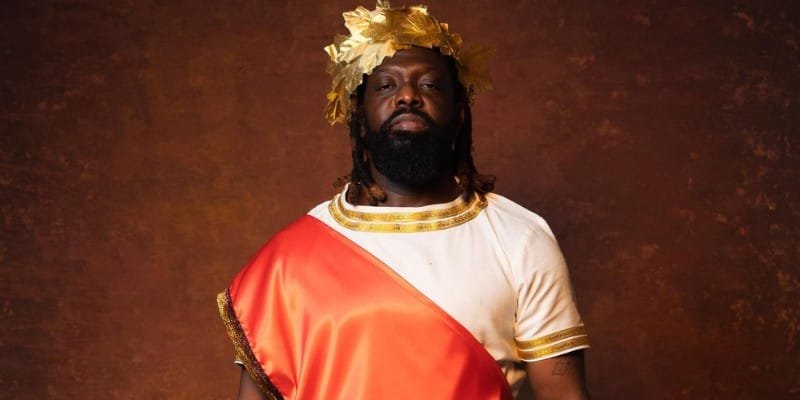
At some point during our conversation, he picks up his phone and walks over to his trophy cabinet to show me the plaque he received for winning the BET Best International Act in 2013, while emphasising the improbability of that accomplishment. At another point, he takes me on a wall tour, showing pictures he took with some of the biggest stars in global music, such as Kendrick Lamar, Mac Miller, Ed Sheeran, Big Sean, Birdman, ASAP Rocky, and Jay-Z.
He remembers his meeting with Jay Z very fondly. He had previously been in the same spaces with the Hip-hop great on multiple occasions. The first was at a hotel in Abuja in 2008. Jay Z was one of the headliners alongside Rihanna and Usher at ThisDay’s Africa Rising Festival on July 11, 2008. MI Abaga also performed at the event. The second was at the 2012 BET awards in Los Angeles, and the third was backstage at the Hackney Festival in London.
For Ice Prince, being in the same orbit as his favourite rapper of all time was a testament to how far he had come. So imagine the excitement he felt when he eventually met Jigga one-on-one in his office in New York. “That moment, interfacing with Jay-Z is one of the moments that I look back on in my life and be like, damn, bro.”
What makes the encounter even more interesting is that it wasn’t just a fan meeting his idol moment. They met, and they did business. “He wanted me to be the ambassador for D’usse,” he tells me. In 2017, he was unveiled as the first African Ambassador of D’usse cognac.
That relationship still endures to this day. He tells me before he got on the call with me, he was on the phone with Briant “Bee High” Biggs (Director of mobile strategies at Roc nation. He is also Jay Z’s cousin), who called to congratulate him on his latest album. More than a decade after that meeting in New York, the line is still open. A testament to how highly regarded he still is in the global music industry.
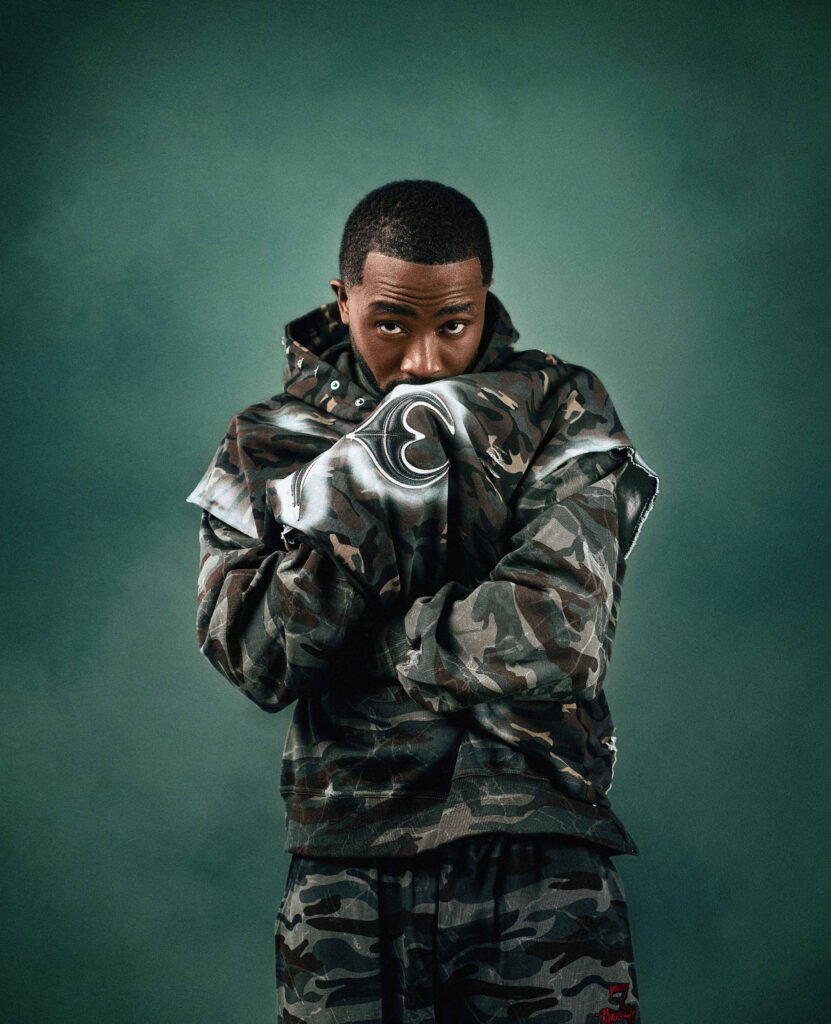
And while his presence at the top of the charts is not as domineering as it was in his prime and his restrained personality does not lend itself to frequent social media activity, Ice Prince is not a nostalgia act. He is still here. Still working. Still relevant in ways that most artists half his age would envy.
“Till September, I am fully booked. My calendar is full. I’m always on the road. I just touched down back from South Africa. I had an amazing tour in Joburg and in Cape Town. And, you know, I’m still getting paid even more than some of the artists that are on the charts” he tells me with a sting in his voice. With a tour of the UK on the horizon following the release of this album, Ice Prince is booked and busy.
Almost twenty years into his career, his presence is still in high demand.
When a man whose life has played out like his has sits down to make an album and calls it Testimony of Grace, he is not just trying to be poetic; he is being precise.
Testimony of Grace: The album
Testimony of Grace is the fifth studio album by Ice Prince, released on May 1st, 2026. The album features a host of producers, including Flash, Reinhard Tega, SB, Chopstix, Run check, Rockit beats, Truce Beats, Yung Willis and Beats by Jay. The album features guest appearances from Niniola, Nikos, Skibii, Ria Sean, UAX, Llona, Sinzu and Medikal.
I had the opportunity to listen to it a week before its release to the public, and I was pleasantly surprised at how refreshed and inspired Ice Prince sounded on the album. Two tracks in, one would also notice Ice Prince is still rapping at a very elite level while retaining the simplicity and relatability that made him one of the most accomplished rappers in the history of Nigerian music. When I quiz him on what keeps his fire burning and how he manages to keep his pen razor sharp, he credits it to passion. “I am very grateful to God that that passion has never left me. It has always been there from when I was a child up until now. I’m still very passionate and enthusiastic about music,” he tells me.
He also credits the emerging talents he surrounds himself with. “I try as much as I can to work with younger musicians. I try not to just bring them up but also have them make input into my music. That keeps me learning and keeps me fresh.” Beyond the studio, he reads voraciously, watches the news and is constantly researching and learning new things. That consistent absorption of new information feeds directly into his writing, and that discipline is evident on the album. “It feels like the first time I’m releasing music. It’s fresh again,” he tells me.
I tell him I reckon he could still out-rap most of the new cats running the Hip-hop game right now. “I don’t like hearing that. Because what do you expect?” he responds. “I came up rapping with MI. I don’t know how many Nigerian rappers can actually rap with MI. I came up rapping with MI. I came up rapping with people like Mode 9. Even if I’m 100 years old and you put me on the mic, I’m always going to rap,” he goes further.

What makes Testimony of Grace a compelling listen is the emotional honesty that is at its core. To arrive at this album, Ice Prince had to deeply reflect on the life he has lived, the challenges he had battled and the successes he has enjoyed. This album comes from a place of deep personal reflection and at the end of the reflection comes the realisation that there is more to celebrate than to mourn. “It’s a moment of gratitude. I’ve achieved so much through music that I never thought I could do. Places I never thought I would get to” he says. Despite everything he has achieved, a part of him still struggles to believe how far he has come.
There are several standout records worth highlighting. Records like Can’t get enough, Hustle, Person like you, Nice One with Skibii are Hip-hop cuts that leave a strong impression, while records like High Class with Niniola, Baby boy with Nikos and Basu Kidi indicate Ice Prince’s desire to craft anthems with the potential to capture the mainstream like he did in his pomp. High Class sounds like a surefire smash hit if marketed properly.
Of all the records on this album, there is none more compelling than Dear Mama, which features Llona and UAX. “Yeah mama, I had to drop you on my screensaver / At least I get to kiss you every day, my queen major” he raps on the record with a tone that conveys the depths of the pain that still lingers over a decade after his mom’s passing. He lost his mother in 2011. She was there when Oleku arrived and saw him become a name the whole nation knew. And then she was gone, right at the moment when everything he had worked for was finally bearing fruit. “I still miss her every day,” he tells me.
There is a different level of intentionality here. Ice Prince approached this project with the weight of finality. He says this is his last album so he wanted to create something that represents him fully. To this end, every element of this album was considered carefully. This is not an album that was assembled quickly or carelessly. It is the work of a man who knew exactly what he wanted to say and took his time to say it properly.
I ask him why he is putting a full stop on releasing albums, especially when it seems like he’s rapping better than he ever did. “I think the album culture is dying. I don’t want to say it’s dead but I want to say it’s dying. The album release culture especially for hip-hop. I feel like it’s dying not just in Nigeria, all over the world. The excitement behind album releases are not as much as it used to be” he tells me.
A Hip-hop head in every sense of the term, Ice Prince is keen on upholding the Hip-hop tradition where a rapper, approaching the latter stage of his career, frames a project as his final album. Jay-Z famously positioned The Black Album as his retirement project in 2003, even staging a farewell concert around it. “At this age, I think it’s okay to tell the fans that I’m dropping this project and it’s my last album. So I want to be able to say I did that too.”
It’s not a hard retirement as he insists he would still be creating music and even possibly releasing singles whenever he feels like. He’s just not certain he will be making an album in the future.
What the future looks like
Ice Prince is at a point in his life where his goals are much different. “I intend to go back to the farm. I want to grow my tomatoes. I want to grow the pepper I eat. I want to grow the mangoes I consume. The yams, the potatoes.”
His ambition to return to the farm aligns with a renewed focus on his health and wellness. Over the past year, he has cut out alcohol, sugar, and energy drinks. He walks every morning, jogs every evening, and eats natural foods. He has also completely stopped smoking.
This renewed focus on his health was sparked during a meeting for a joint project that he and Chopsticks were putting together. The project is called Starters and was released in 2025. “Chopsticks said something that just hit me different. Chopsticks was just like, man, I think with this album we need to lose some weight, we need to cut out this belly. Because man, my belly was huge,” he says. “In fact, I started calling myself Big Daddy Ice to cover the shame of the fact that I was getting too fat” he goes further before telling me about the numerous instances of body shaming he endured.
He immediately plugged into it and began walking long distances every day. At the initial stages, Chopstix was always around to support him. “Once my body clocked in and I couldn’t stop, he let me do it on my own. He didn’t have to come to me every day again.”
Now the belly is gone, and his body is transformed. His baseline as a person feels upgraded, and he feels refreshed. You can hear that refreshment in the music.
He also wants to return to school. After his time at university was cut short, Ice Prince feels it’s time to pursue that path again. “I miss the whole waking up early to go sit down in the class, take assignments, do homework. I miss that. People have been advising me to go to school online or take online courses. That’s not what I intend to do at all. I intend to go back to a real formal school setting. I want to do that for like five years.”
While many would have expected him to take on a more executive role like he did in 2015 when he was appointed the Vice president of Chocolate city, he considers his stint in the role as a monumental failure and insists that he doesn’t need to take up such roles to help and develop artists. “I’d rather do it behind the scenes than put my name and be in an office forming exec. So many producers and artists have come through me without me trying to take credit for it. I’m not a person that likes being thanked. I don’t like ‘thank you’ coming to me. I’m not saying other artists can’t be execs or whatever. But it’s just not me.”
He’s still going to be performing across the world. When you have a catalogue like Ice Prince has, your presence is always going to be in demand. It is for that reason why Ice Prince is deaf to criticisms that revolve around his artistry or the quality of his lyricism. “None of these so-called rappers have my catalogue. I really don’t care what these rappers say because I know what my catalogue is” he says emphatically.
Ice Prince is a legend. It’s a term he doesn’t like to be described as, but the career he has had and the accomplishments he has stacked up make him one. When one considers the position he started his journey from, those accomplishments become even more remarkable than they already are. “Consistency and survival,” he says when I ask what he wants people to take from his life and career. For a boy who grew up in a city on fire, buried his father at eleven and lost his mother at a pivotal moment in his life, Ice Prince has built something extraordinary out of nothing. He achieved all this using the only door that was left open to him. Whichever way you choose to look at it, Ice Prince’s journey is in every sense of the word a testimony of grace.