






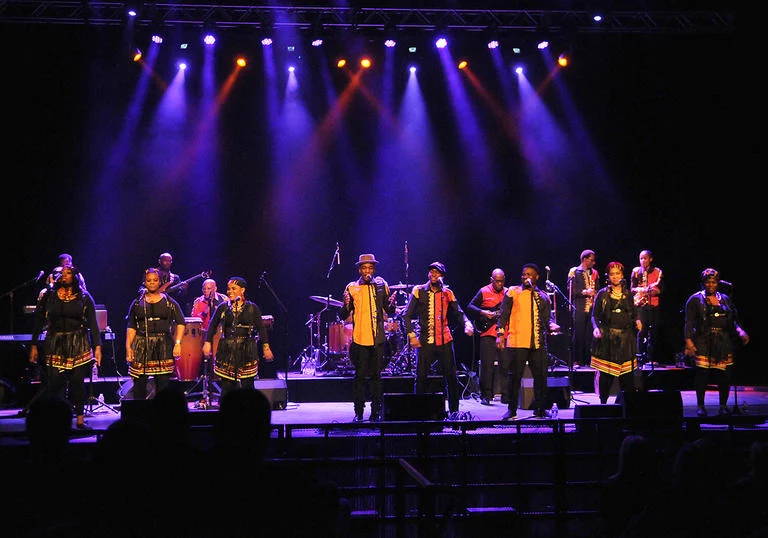
In a world increasingly characterised by political polarisation, social fragmentation and widespread human suffering, experiences that bring people together across differences have become more important than ever. Among the most powerful of these are concerts and choirs. Whether it is thousands of people singing along at a music festival, communities gathering for a local performance, or singers standing shoulder to shoulder in a choir, music has a unique ability to unite people in a way few other activities can.
The remarkable aspect of music is that it transcends many of the barriers that divide us. Language, nationality, religion, age and social background can all become secondary when people are immersed in a shared musical experience. At a concert, strangers who may hold very different beliefs find themselves singing the same lyrics, clapping to the same rhythm and sharing the same emotions. For a few precious hours, the divisions that often dominate public discourse can give way to a sense of common humanity.
Choirs provide an even more literal example of harmony. Individuals with different personalities, experiences and viewpoints come together to contribute their unique voice to a collective sound. No single singer can create the richness of the performance alone. The beauty emerges from cooperation, listening and mutual support. Each voice matters, but it is the blending of voices that creates something greater than the sum of its parts.

Scientific research increasingly supports what many people intuitively feel: singing together strengthens social bonds, reduces stress and fosters feelings of trust and belonging. Choir members often report a deep sense of connection and wellbeing, while audiences frequently experience feelings of inspiration and emotional uplift. Music reminds us that beneath our differences we share common emotional needs — to love, to belong, to express ourselves and to connect with others.
Yet while music can create moments of unity, many would argue that humanity faces a deeper, fundamental challenge. Why, despite our capacity for love, cooperation and harmony, has human history also been marked by conflict, division and immense human suffering? This question lies at the heart of the work promoted by the international organisation Fix The World (previously called the World Transformation Movement).
Fix The World advocates the ideas of Australian biologist Jeremy Griffith, who argues that humanity’s underlying problem has been the unresolved issue of ‘the human condition’ — the apparent contradiction between our capacity for good and our propensity for destructive behaviour. According to Griffith, much of human conflict, insecurity and division stems from humanity’s long struggle to understand why humans became capable of acting in ways that often seem at odds with our cooperative and loving instincts.
Griffith’s theory centres on the relationship between humanity’s instinctive and conscious dimensions. He proposes that the emergence of an intellectually self-aware mind created a fundamental clash with pre-existing instinctive orientations. Griffith contends that this conflict generated profound psychological tension, from which many forms of human defensiveness — including aggression, egocentricity and alienation — ultimately emerged. Fix The World argues that by understanding the origins of this tension, individuals can overcome these defensive behaviours and build a more psychologically healthy and cooperative world.
It argues that while initiatives promoting peace, understanding and cooperation are invaluable, lasting global harmony ultimately requires this deeper understanding of ourselves if we are to move beyond the anger, disconnection and distrust that fuel many of the world’s divisions. In Griffith’s view, humanity has been engaged in a heroic search for knowledge and self-understanding, and it is only through completing that journey that genuine reconciliation can be achieved.
It is a noble aspiration that resonates with the unifying power seen in music. Both concerts and choirs demonstrate what becomes possible when people move beyond suspicion and separation and experience a sense of shared purpose. They reveal that cooperation is not merely an ideal but something humans can experience directly and joyfully.

Perhaps that is why music remains such a powerful force during difficult times. It offers more than entertainment; it provides a living example of unity. Every choir rehearsal and every concert audience becomes a reminder that people can come together despite differences and create something beautiful.
In an era when division is amplified and human suffering remains widespread, these moments of harmony carry profound significance. They remind us that the human story is not only one of conflict but also of connection. Whether through the soaring voices of a choir, the collective energy of a concert crowd, or broader efforts to better understand ourselves and our shared humanity, the possibility of a more united world remains alive. Music, quite literally, allows us to hear what harmony sounds like — and perhaps inspires us to create more of it in our lives and societies.






![Wizkid at Flytime Fest 2022 [Twitter/ @ijay4short]](https://africanfolder.com/media/2022/12/Wizkid-at-Flytime-Fest-2022-.png "5 Epic Moments At The Flytime Fest 2022 27")