






The Nigeria Police Force (NPF) stands as the principal law enforcement and lead security agency in Nigeria, with constitutional exclusive jurisdiction throughout the nation. With approximately 371,800 sworn officers deployed across all 36 states and the Federal Capital Territory (Abuja), the NPF plays a critical role in maintaining law and order, protecting lives and property, preventing and detecting crime, and ensuring the safety and security of Nigerian citizens.
Understanding the Nigerian Police ranks, symbols, and salary framework is essential for anyone considering a law enforcement career or seeking to comprehend Nigeria’s internal security apparatus. This comprehensive guide provides detailed insights into every aspect of the NPF hierarchy, from entry-level constables to the Inspector-General of Police, along with current salary information adjusted to reflect the 2025 minimum wage standards.
Historical Background of the Nigeria Police Force
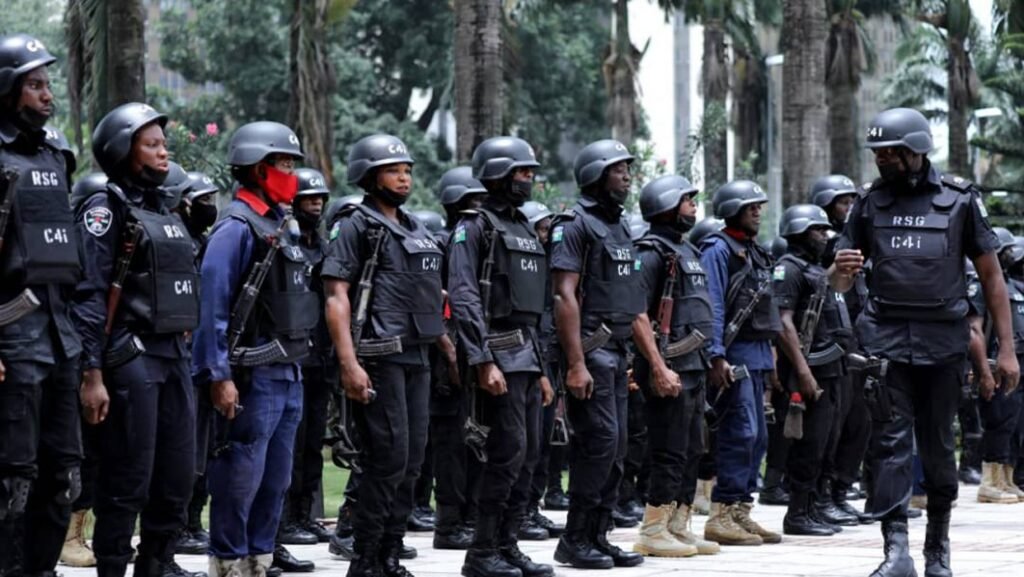
Colonial Origins (1861-1930)
The Nigeria Police Force has one of the longest histories among law enforcement agencies in Africa, tracing its roots back to 1861 when the British colonial administration established a 30-member Consular Guard in Lagos Colony following the annexation of Lagos. This small security unit was created to protect British colonial properties and maintain order in the newly acquired territory.
Key developments in early police formation:
1863: The Consular Guard evolved into the Hausa Police, consisting of approximately 600 men, including freed slaves and captives. Lieutenant John Hawley Glover recruited many Hausa individuals, giving the force its name.
1879: The force was reorganized and renamed the Hausa Constabulary, expanded through recruitment of additional personnel, mostly Hausa. This new police force was military in character but performed mainly civil duties, consisting of one Commissioner, two Assistant Commissioners, one Superintendent, one Assistant Superintendent, one Pay and Quartermaster, one Master Tailor, and 250 other ranks.
1888: The Royal Niger Company established the Royal Niger Company Constabulary in the north, with headquarters at Lokoja.
1894: The Niger Coast Constabulary was formed in Calabar under the newly proclaimed Niger Coast Protectorate to police the eastern region.
1896: The Lagos Police was officially established as a formal police organization for the Lagos Colony.
Early 1900s: When the Northern and Southern Nigeria Protectorates were proclaimed, portions of the Royal Niger Company Constabulary became the Northern Nigeria Police, while parts of the Niger Coast Constabulary formed the Southern Nigeria Police.
Amalgamation and Unification (1914-1930)
In 1914, when Lord Lugard merged the Northern and Southern Protectorates to form the colony of Nigeria, the various police forces continued to operate separately. It wasn’t until 1930 that the Northern and Southern regional police forces were merged to form the colony’s first truly national police organization—the Nigeria Police Force.

This unification created a centralized law enforcement agency under colonial administration, though the force was organized and deployed primarily as an occupation force to suppress indigenous Nigerian peoples and quell resistance to colonial rule. The colonial police earned a notorious reputation for brutal subjugation of communities and violations of local populations’ rights.
Post-Independence Development (1960-Present)
When Nigeria gained independence on October 1, 1960, the Nigeria Police Force was retained as the national law enforcement agency. However, the new Nigerian constitution devolved substantial power to three regional governments (Northern, Western, and Eastern), each of which maintained local police forces alongside the federal NPF.
1966-1999: During military rule, the NPF came under increased militarization, with military mentality infused into policing operations. The force was reorganized multiple times to improve efficiency and control.
1986: The NPF was restructured into seven statewide commands, replacing the previous structure tied to individual states. This reorganization aimed to improve operational efficiency.
1989: President Ibrahim Babangida abolished the Police Service Commission and established the Nigeria Police Council under direct presidential control. Plans were announced for the Nigeria Police Academy in Kano.
1996: The Nigeria Police Academy was formally commissioned on April 2, 1996, by Head of State General Sani Abacha, providing degree-level training for future police officers.
1999: The 1999 Constitution of the Federal Republic of Nigeria formally established the NPF under Section 214, designating it as the national police with exclusive federal jurisdiction.
2012: The Federal Government upgraded the Nigeria Police Academy to a degree-awarding institution.
2020: The NPF underwent major overhauls following nationwide #EndSARS protests against police brutality, leading to reforms in training, accountability, and welfare.
2024-2025: Ongoing modernization includes recruitment expansion (plans to increase force to 650,000 officers), salary increases aligned with minimum wage adjustments, and enhanced training programs.
Today, the Nigeria Police Force is headed by Inspector-General Kayode Egbetokun (appointed in 2023), who oversees the Force’s operations through a hierarchical command structure divided into 17 zones and 8 administrative departments.
Understanding the Nigerian Police Force Rank Structure

The Nigeria Police Force employs a hierarchical rank system with clear distinctions between commissioned officers (senior ranks) and non-commissioned officers (junior ranks). This structure ensures effective command, maintains discipline, and provides structured career progression pathways.
Two Main Categories of Ranks
1. Commissioned Officers: These are senior police officers who hold leadership positions, make strategic decisions, and command police formations. They typically enter through the Nigeria Police Academy with university degrees or through lateral entry programs. Commissioned ranks begin at Assistant Superintendent of Police (ASP) and extend to Inspector-General of Police (IGP).
2. Non-Commissioned Officers: These form the operational backbone of the Force, executing orders and managing day-to-day law enforcement activities. They enter through direct recruitment with secondary school qualifications. Non-commissioned ranks range from Constable to Sergeant Major.
Complete Nigerian Police Ranks: Non-Commissioned Officers
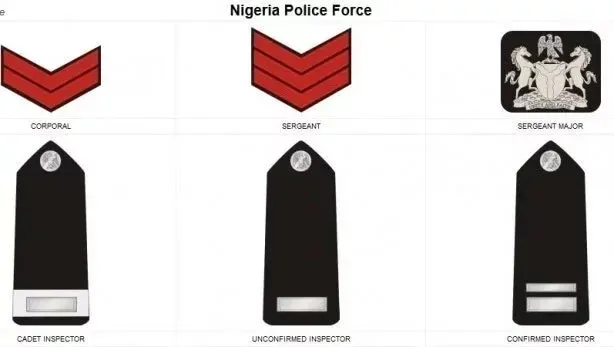
Non-commissioned officers in the NPF join through direct recruitment and undergo training at various police colleges nationwide. Here are all non-commissioned ranks in ascending order of seniority:
1. Police Constable (PC)
- Position: Entry-level rank in the Nigeria Police Force
- Insignia: Two red downward-pointing chevrons (arrowheads)
- Grades: Constable I and Constable II
- Responsibilities: Street patrol, traffic control, emergency response, basic investigation, community policing
- Monthly Salary Range: ₦67,000 – ₦78,000
- Annual Salary Range: ₦804,000 – ₦936,000
2. Police Corporal (Cpl)
- Position: Junior supervisory rank above Constable
- Insignia: Two red downward-pointing chevrons
- Responsibilities: Leading small patrol teams, supervising constables, report writing, minor investigations
- Monthly Salary Range: ₦78,000 – ₦93,000
- Annual Salary Range: ₦936,000 – ₦1,116,000
3. Police Sergeant (Sgt)
- Position: Mid-level non-commissioned rank
- Insignia: Three red downward-pointing chevrons
- Responsibilities: Station duty officer, supervising patrols, training junior officers, case management
- Monthly Salary Range: ₦93,000 – ₦124,000
- Annual Salary Range: ₦1,116,000 – ₦1,488,000
4. Sergeant Major (SM)
- Position: Highest non-commissioned rank
- Insignia: Nigerian coat of arms
- Responsibilities: Senior station management, administrative duties, bridge between NCOs and commissioned officers
- Monthly Salary Range: ₦124,000 – ₦156,000
- Annual Salary Range: ₦1,488,000 – ₦1,872,000
Complete Nigerian Police Ranks: Inspectorate Cadre
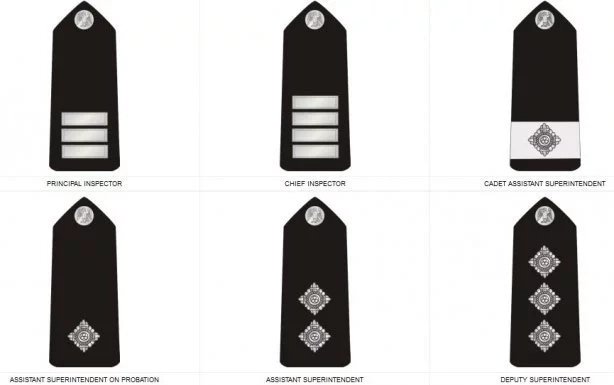
The Inspectorate cadre represents a transitional level between non-commissioned officers and commissioned officers. Inspectors are considered junior commissioned officers:
5. Inspector of Police (Insp)
- Position: Junior commissioned officer rank
- Insignia: One thick bar above one thin bar (parallel bars)
- Responsibilities: Investigation officer, station officer, supervising sergeants and constables
- Monthly Salary Range: ₦156,000 – ₦187,000
- Annual Salary Range: ₦1,872,000 – ₦2,244,000
6. Principal Inspector (PI)
- Position: Senior inspector rank
- Insignia: Three parallel bars
- Responsibilities: Leading investigation teams, divisional duties, case file management
- Monthly Salary Range: ₦171,000 – ₦202,000
- Annual Salary Range: ₦2,052,000 – ₦2,424,000
7. Chief Inspector (CI)
- Position: Highest inspectorate rank
- Insignia: Four parallel bars
- Responsibilities: Divisional officer, major investigations, supervising multiple inspectors
- Monthly Salary Range: ₦187,000 – ₦218,000
- Annual Salary Range: ₦2,244,000 – ₦2,616,000
Complete Nigerian Police Ranks: Commissioned Officers (Superintendent Cadre)
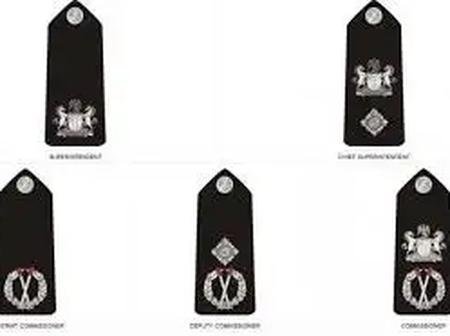
Commissioned officers in the NPF hold degrees and occupy strategic leadership positions. Here are all superintendent ranks from lowest to highest:
8. Assistant Superintendent of Police (ASP)
- Position: Entry-level commissioned officer
- Insignia: Two vertically arranged stars
- Grades: ASP II and ASP I (with 10 salary steps each)
- Responsibilities: Divisional Police Officer (DPO), departmental head, case supervision
- Monthly Salary Range: ₦243,000 – ₦356,000
- Annual Salary Range: ₦2,916,000 – ₦4,272,000
- Entry Routes: Nigeria Police Academy graduates (5-year training), direct entry for degree holders (18-month training)
9. Deputy Superintendent of Police (DSP)
- Position: Mid-level superintendent officer
- Insignia: Three vertically arranged stars
- Responsibilities: Area command support, supervising ASPs, operational planning
- Monthly Salary Range: ₦265,000 – ₦427,000
- Annual Salary Range: ₦3,180,000 – ₦4,272,000
10. Superintendent of Police (SP)
- Position: Senior superintendent officer
- Insignia: Nigerian coat of arms alone
- Responsibilities: Commanding police divisions, strategic operations, policy implementation
- Monthly Salary Range: ₦268,000 – ₦458,000
- Annual Salary Range: ₦3,216,000 – ₦4,296,000
11. Chief Superintendent of Police (CSP)
- Position: Senior divisional commander
- Insignia: One star above Nigerian coat of arms
- Responsibilities: State police department head, major operational command, strategic planning
- Monthly Salary Range: ₦311,000 – ₦520,000
- Annual Salary Range: ₦3,732,000 – ₦6,240,000
- Equivalent Rank: Colonel (Army)
Complete Nigerian Police Ranks: Senior Officers (Commissioner Cadre)
Senior officers occupy the highest positions in state commands and headquarters departments:
12. Assistant Commissioner of Police (ACP)
- Position: Senior command officer
- Insignia: Laurel wreath surrounding crossed tipstaffs
- Responsibilities: Deputy state commander, zonal operations, supervising CSPs and SPs
- Monthly Salary Range: ₦331,000 – ₦567,000
- Annual Salary Range: ₦3,972,000 – ₦6,804,000
- Equivalent Rank: Brigadier General (Army)
13. Deputy Commissioner of Police (DCP)
- Position: Deputy state commander
- Insignia: Laurel wreath with crossed tipstaffs and enhanced design
- Responsibilities: Area command leadership, second-highest officer in state command, standing in for CP
- Monthly Salary Range: ₦434,000 – ₦660,000
- Annual Salary Range: ₦5,208,000 – ₦7,920,000
- Equivalent Rank: Major General (Army)
14. Commissioner of Police (CP)
- Position: State police commander
- Insignia: Laurel wreath surrounding Nigerian coat of arms and crossed tipstaffs
- Responsibilities: Overall command of state police operations, strategic leadership, reporting to IGP
- Monthly Salary Range: ₦472,000 – ₦696,000
- Annual Salary Range: ₦5,664,000 – ₦8,352,000
- Equivalent Rank: Lieutenant General (Army)
- Note: Appointed by IGP subject to Police Service Commission approval

Complete Nigerian Police Ranks: Top Command
The highest echelon of police leadership manages the entire Force at the national level:
15. Assistant Inspector-General of Police (AIG)
- Position: Zonal commander
- Insignia: Nigerian coat of arms, crossed tipstaffs, one bar, all surrounded by laurel wreath
- Responsibilities: Commanding zonal operations (multiple states), strategic planning, policy development
- Monthly Salary Range: ₦778,000 – ₦933,000
- Annual Salary Range: ₦9,336,000 – ₦11,196,000
16. Deputy Inspector-General of Police (DIG)
- Position: Second-highest rank in NPF
- Insignia: Enhanced laurel wreath with crossed tipstaffs and national symbols
- Responsibilities: Heading administrative departments (7 departments), acting for IGP, strategic command
- Monthly Salary Range: ₦851,000 – ₦1,089,000
- Annual Salary Range: ₦10,212,000 – ₦13,068,000
- Current DIGs: Multiple Deputy Inspectors-General head Finance & Administration, Operations, Logistics, Force CID, Training, Research & Planning, and ICT departments
17. Inspector-General of Police (IGP)
- Position: Highest rank and head of Nigeria Police Force
- Insignia: Nigerian coat of arms flanked by two crossed tipstaffs surrounded by laurel wreaths with two stars
- Responsibilities: Overall command and administration of NPF, national security advisor on internal affairs, policy formulation
- Monthly Salary Range: ₦1,107,000 – ₦1,244,000
- Annual Salary Range: ₦13,284,000 – ₦14,928,000
- Appointment: Appointed by the President, subject to Senate confirmation
- Current IGP: Kayode Adeolu Egbetokun, Ph.D., NPM (appointed 2023)
Nigerian Police Force Symbols and Insignia
The Nigeria Police Force uses a distinct system of rank insignia to denote hierarchy and authority. Understanding these symbols is crucial for identifying ranks at a glance.
The Nigeria Police Force Logo
The official NPF emblem features several symbolic elements representing the Force’s values and mission:
1. The Eagle (at the crest)
- Symbolism: Strength, vigilance, authority, and swift action
- Represents the watchful eye of the police force over Nigerian citizens
- Embodies the idea of soaring to great heights in pursuit of justice
- Signifies the NPF’s ability to observe, detect, and respond to threats effectively
2. The Crossed Tipstaffs
- Symbolism: Authority, office, and justice
- Traditionally used as symbols of law enforcement authority
- Represents the NPF’s role as primary law enforcement agency
- Signifies commitment to upholding justice and enforcing the law fairly
3. The Elephant
- Symbolism: Courage, steadfastness, reliability, wisdom, and resilience
- Central figure representing the Force’s strength in law enforcement
- Symbolizes the NPF’s commitment to protecting citizens from harm
- Represents dedication to using intelligence and sound judgment
- In African culture, elephants embody qualities essential for effective policing
4. The Green Lawn
- Symbolism: Nigeria’s rich vegetation and natural resources
- Represents the land and territory the police protect
- Signifies environmental and agricultural wealth of Nigeria
- Connects the Force to the Nigerian landscape
5. The Laurel Wreath
- Symbolism: Victory, honor, achievement, and excellence
- Indicates NPF achievements in combating crime
- Represents commitment to professional excellence
- Serves as reminder to uphold justice and integrity
6. The Shield (in some variations)
- Symbolism: Protection and defense
- Represents commitment to safeguarding lives and properties
- Conveys resilience in facing challenges and threats
Rank Insignia System
Non-Commissioned Officers:
- Constable: Two red downward-pointing chevrons (arrowheads)
- Corporal: Two red downward-pointing chevrons (slightly larger)
- Sergeant: Three red downward-pointing chevrons
- Sergeant Major: Nigerian coat of arms
Inspectorate Cadre:
- Inspector: One thick bar above one thin bar (parallel bars)
- Principal Inspector: Three parallel bars
- Chief Inspector: Four parallel bars
Superintendent Cadre:
- ASP: Two vertically arranged stars
- DSP: Three vertically arranged stars
- SP: Nigerian coat of arms
- CSP: One star above Nigerian coat of arms
Commissioner Cadre:
- ACP: Laurel wreath surrounding crossed tipstaffs
- DCP: Enhanced laurel wreath with crossed tipstaffs
- CP: Laurel wreath surrounding coat of arms and crossed tipstaffs
Command Cadre:
- AIG: Coat of arms, crossed tipstaffs, one bar, laurel wreath
- DIG: Enhanced insignia with additional elements
- IGP: Coat of arms flanked by crossed tipstaffs, laurel wreaths, two stars
Nigeria Police Flag
The Nigeria Police Force uses a distinctive flag designed by Michael Taiwo Akinkunmi (who also designed Nigeria’s national flag) in 1959. The police flag incorporates elements that represent law enforcement authority and Nigerian identity.
Nigerian Police Force Salary Structure 2025

The Nigeria Police Force operates under the Consolidated Police Salary Structure (CONPOSS), which underwent a 20% increase in January 2022 following Federal Executive Council approval. Salaries have been further adjusted to reflect the 2025 minimum wage increase from ₦30,000 to ₦70,000, representing approximately 55-133% increases across different ranks.
Factors Affecting Nigerian Police Salaries
- Rank and Grade: Each rank has multiple salary steps (grades) based on years in rank
- Years of Service: Longevity increases salary within each rank
- Educational Qualifications: Degree holders earn more than non-graduates
- Posting and Location: High-risk areas command additional allowances
- Special Assignments: Task force and specialized units receive extra compensation
- Performance: Merit-based increments for exceptional service
Complete Salary Breakdown by Rank (2025 Adjusted)
Non-Commissioned Officers Salaries
| Rank | Grade Levels | Monthly Salary Range | Annual Salary Range |
|---|---|---|---|
| Constable | PC II, PC I (1-10) | ₦67,000 – ₦78,000 | ₦804,000 – ₦936,000 |
| Corporal | Cpl (1-10) | ₦78,000 – ₦93,000 | ₦936,000 – ₦1,116,000 |
| Sergeant | Sgt (1-10) | ₦93,000 – ₦124,000 | ₦1,116,000 – ₦1,488,000 |
| Sergeant Major | SM (1-10) | ₦124,000 – ₦156,000 | ₦1,488,000 – ₦1,872,000 |
Inspectorate Cadre Salaries
| Rank | Grade Levels | Monthly Salary Range | Annual Salary Range |
|---|---|---|---|
| Inspector | Insp (1-10) | ₦156,000 – ₦187,000 | ₦1,872,000 – ₦2,244,000 |
| Principal Inspector | PI (1-10) | ₦171,000 – ₦202,000 | ₦2,052,000 – ₦2,424,000 |
| Chief Inspector | CI (1-10) | ₦187,000 – ₦218,000 | ₦2,244,000 – ₦2,616,000 |
Commissioned Officers Salaries
| Rank | Grade Levels | Monthly Salary Range | Annual Salary Range |
|---|---|---|---|
| ASP | ASP II, ASP I (1-10 each) | ₦243,000 – ₦356,000 | ₦2,916,000 – ₦4,272,000 |
| DSP | DSP (1-10) | ₦265,000 – ₦427,000 | ₦3,180,000 – ₦5,124,000 |
| SP | SP (1-10) | ₦268,000 – ₦458,000 | ₦3,216,000 – ₦4,296,000 |
| CSP | CSP (1-10) | ₦311,000 – ₦520,000 | ₦3,732,000 – ₦6,240,000 |
| ACP | ACP (1-10) | ₦331,000 – ₦567,000 | ₦3,972,000 – ₦6,804,000 |
| DCP | DCP (1-10) | ₦434,000 – ₦660,000 | ₦5,208,000 – ₦7,920,000 |
| CP | CP (1-10) | ₦472,000 – ₦696,000 | ₦5,664,000 – ₦8,352,000 |
| AIG | AIG (1-5) | ₦778,000 – ₦933,000 | ₦9,336,000 – ₦11,196,000 |
| DIG | DIG (1-5) | ₦851,000 – ₦1,089,000 | ₦10,212,000 – ₦13,068,000 |
| IGP | Single Grade | ₦1,107,000 – ₦1,244,000 | ₦13,284,000 – ₦14,928,000 |
Important Note: These figures represent base salaries under CONPOSS. Total monthly compensation increases significantly when allowances are included, sometimes adding 40-70% to base pay depending on posting, assignment, and operational duties.
Nigerian Police Force Allowances and Benefits
Beyond base salaries, Nigerian Police officers receive numerous allowances designed to compensate for the unique demands of law enforcement service:
Monthly Allowances
1. Rent/Housing Allowance
- Amount: ₦30,000 – ₦150,000 per month
- Purpose: Supports housing costs for officers not living in barracks
- Varies by rank and location (higher in Lagos, Abuja, Port Harcourt)
2. Transport Allowance
- Amount: ₦10,000 – ₦50,000 per month
- Purpose: Covers official and personal transportation
- Higher for officers with command responsibilities
3. Uniform Allowance
- Amount: ₦4,000 – ₦30,000 annually (paid in installments)
- Purpose: Purchase and maintenance of police uniforms
- Covers working dress, ceremonial uniforms, accessories
4. Risk/Hazard Allowance
- Amount: ₦15,000 – ₦80,000 per month
- Purpose: Compensates for dangers inherent in police work
- Higher for special task forces, anti-robbery squads, counter-terrorism units
5. Utility Allowance
- Amount: ₦5,000 – ₦25,000 per month
- Purpose: Covers water, electricity, and other utilities
- Varies by rank and housing situation
6. Special Duty Allowance
- Amount: Varies by assignment
- Purpose: Extra compensation for specialized assignments
- Includes VIP protection, special investigations, task forces
7. Mobile Police (MOPOL) Allowance
- Amount: ₦20,000 – ₦60,000 per month
- Purpose: For officers in Mobile Police Force units
- Compensates for riot control and high-risk deployments
8. Operation Allowance
- Amount: Varies by operation type and duration
- Purpose: Paid during special operations and deployments
- Can significantly boost monthly income
9. Training Allowance
- Amount: Varies by training program
- Purpose: Supports officers during specialized courses
- Includes food, accommodation, and stipend
10. Hardship Allowance
- Amount: ₦15,000 – ₦70,000 per month
- Purpose: For officers posted to difficult or remote areas
- Higher in conflict zones and underserved regions
Comprehensive Benefits Package
Healthcare Benefits
- Free Medical Treatment: Access to police hospitals and clinics
- Medical Insurance: Coverage for officers and immediate families
- Emergency Care: Priority treatment at police medical facilities
- Specialist Referrals: Access to specialized medical services
- Dental Care: Basic dental services at police clinics
Housing Benefits
- Police Barracks: Free accommodation in police quarters when available
- Housing Loans: Subsidized loans for home ownership
- Rent Allowance: For officers without access to barracks
- Accommodation Priority: Senior officers receive better quarters
Educational Benefits
- Nigeria Police Academy: Degree programs for aspiring officers
- In-Service Training: Continuous professional development
- Specialized Courses: Investigative, forensic, and tactical training
- Children’s Education: Some educational support for officers’ children
- Scholarship Programs: Limited scholarships for dependents
Retirement Benefits
- Pension Scheme: Monthly pension based on rank and years of service (minimum 15 years service required for pension)
- Gratuity: Lump sum payment upon retirement (minimum 10 years service)
- Service Years: Minimum 35 years or age 60 for retirement
- Medical Coverage: Continued healthcare for retirees (limited)
Insurance and Welfare
- Life Insurance: Coverage for line-of-duty deaths
- Injury Compensation: Support for service-related injuries
- Death Benefits: Support for families of fallen officers
- Police Cooperative: Access to cooperative society loans
- Emergency Assistance: Welfare support during crises
Additional Privileges
- Identity Cards: Official police identification
- Discounted Services: Access to police cooperative stores
- Leave Benefits: Annual leave (30 days)
- Weapons Permit: Authorization to carry service weapons
- Professional Recognition: Respect and authority in society

Total Compensation Example
A Deputy Superintendent of Police (DSP) with 8 years of service posted to Lagos might earn:
- Base Salary: ₦296,000
- Rent Allowance: ₦80,000
- Transport Allowance: ₦25,000
- Utility Allowance: ₦15,000
- Risk Allowance: ₦30,000
- Uniform Allowance: ₦2,500 (monthly average)
- Total Monthly Income: ₦448,500
This demonstrates how allowances can increase base salary by approximately 50%, especially in urban centers and high-risk postings.
Entry Routes into the Nigeria Police Force
The Nigeria Police Force offers multiple pathways for joining, catering to different educational backgrounds:
1. Direct Recruitment (Constable Entry)
Target Audience: Secondary school certificate holders Training Duration: 6 months at Police Training Schools Entry Rank: Police Constable Starting Salary: ₦67,000 – ₦78,000
Basic Requirements:
- Nigerian citizen by birth
- Age: 18-25 years (some positions up to 28 years)
- Height: Minimum 1.67m (males), 1.64m (females)
- Chest measurement: Minimum 86cm expanded (males only)
- Education: SSCE/WAEC/NECO/GCE with minimum 5 credits including English and Mathematics
- Valid National Identity Number (NIN)
- Single (unmarried); females must not be pregnant
- Medically, physically, and psychologically fit
- No criminal record
- No physical deformities (flat feet, bow legs, knock knees, etc.)
- No tattoos or body inscriptions
- Valid email address and phone number
Required Documents:
- Birth certificate or age declaration
- Educational certificates (WAEC/NECO)
- Certificate of state of origin (from LGA)
- Passport photographs
- Guarantor’s form (signed by public servant GL13+, or CSP+)
- Parent/guardian consent form
- Police clearance certificate
- Medical fitness certificate
2. Nigeria Police Academy (POLAC) – Officer Entry
Target Audience: JAMB candidates seeking police and academic training Training Duration: 5 years (combined academic and police training) Entry Rank: Assistant Superintendent of Police II (ASP II) Starting Salary: ₦243,000 – ₦280,000 Degree Earned: Bachelor’s degree in various disciplines
Basic Requirements:
- Nigerian citizen by birth
- Age: 16-21 years by October 31 of admission year
- Valid National Identity Number (NIN)
- JAMB UTME score: Minimum 180, with POLAC as first choice
- Six O’Level credits including English and Mathematics (maximum two sittings)
- SSCE results from 2015 onwards (earlier results not accepted)
- Height: Minimum 1.67m (males), 1.64m (females)
- Chest measurement: Minimum 86cm (males)
- Single (unmarried); females must not be pregnant
- Medically, physically, and psychologically fit
- Good moral character
Available Courses (3 Faculties):
Faculty of Humanities:
- B.A. English
- B.A. History & International Studies
- B.A. Linguistics and Nigerian Languages
- B.Ed. English, History
Faculty of Science:
- B.Sc. Computer Science
- B.Sc. Forensic Science
- B.Sc. Biological Sciences
- B.Sc. Biochemistry
- B.Sc. Chemistry
- B.Sc. Mathematics
- B.Sc. Physics
- B.Sc. Ed. Computer Science
- B.Ed. Chemistry, Biology, Maths, Physics
Faculty of Social and Management Sciences:
- B.Sc. Accounting
- B.Sc. Political Science
- B.Sc. Psychology
- B.Sc. Economics
- B.Sc. Management Science
- B.Sc. Sociology
- B.Sc. Criminology & Security Studies
- B.Ed. Political Science, Economics
- B.Ed. Guidance & Counselling
- B.Ed. Education Management
- B.Ed. Psychology
Application Process:
- Apply to JAMB selecting POLAC Wudil as first choice
- Visit www.admission.polac.edu.ng
- Generate Remita Retrieval Reference (RRR) code
- Pay ₦6,000 application fee (includes ₦2,000 Post-UTME)
- Complete online application form
- Upload SSCE, birth certificate, certificate of origin
- Print completed form and guarantor’s form
- Take Computer-Based Aptitude Test at POLAC
- Attend physical screening (for successful CBT candidates)
- Undergo medical screening
- Attend interview and selection
- Begin 5-year training upon selection
3. Cadet Inspector Program (18-Month Training)
Target Audience: SSCE holders aspiring to Inspectorate cadre Training Duration: 18 months Entry Rank: Inspector Starting Salary: ₦156,000 – ₦187,000
Basic Requirements:
- SSCE with 5 credits including English and Mathematics
- Age: Maximum 24 years
- Similar physical and character requirements as constable entry
- Pass aptitude tests and interviews
4. Cadet ASP Program (18-Month Training)
Target Audience: University degree or HND holders Training Duration: 18 months Entry Rank: Assistant Superintendent of Police II (ASP II) Starting Salary: ₦243,000 – ₦280,000
Basic Requirements:
- University degree (Second Class Lower minimum) or HND (Upper Credit minimum)
- Age: Maximum 28 years
- Similar physical requirements as other entry routes
- Pass selection process
Training Structure (18 months):
Basic Stage (6 months):
- Documentation, screening, attestation, oath-taking
- Drill courses
- Police duties and procedures
- Laws, criminal law of evidence, criminal procedure
- Physical fitness training
Intermediate Stage (6 months):
- Advanced police duties
- Investigation techniques
- Criminal law and procedure
- Weapons training
- Community policing
Advanced Stage (6 months):
- Specialized training
- Mobile Police Force training (4 weeks)
- Police educational visit (1 week)
- Interviews (4 weeks)
- Passing Out Parade practice (4 weeks)
Post-Graduation: One-year practical attachment to state commands before independent deployment.
Career Progression and Promotion Criteria
Promotion in the Nigeria Police Force follows structured timelines combined with performance-based assessments, mandatory training, and availability of vacancies.
Promotion Timeline for Non-Commissioned Officers
Constable to Corporal: 3-5 years minimum service Corporal to Sergeant: 3-5 years minimum service Sergeant to Sergeant Major: 4-6 years minimum service Sergeant Major to Inspector: Examination-based, typically requires additional qualifications
Promotion Timeline for Inspectorate Cadre
Inspector to Principal Inspector: 3-4 years minimum Principal Inspector to Chief Inspector: 3-4 years minimum Chief Inspector to ASP: Rare, usually requires degree qualification
Promotion Timeline for Commissioned Officers
ASP to DSP: 3-4 years minimum DSP to SP: 3-4 years minimum SP to CSP: 4-5 years minimum CSP to ACP: 4-5 years minimum (15-20 years total service typically required) ACP to DCP: 4-6 years minimum DCP to CP: Selection-based, 4-6 years minimum CP to AIG: By Police Service Commission approval, based on merit and vacancies AIG to DIG: Presidential appointment, based on exceptional performance DIG to IGP: Presidential appointment with Senate confirmation
Key Promotion Criteria
- Time in Rank: Minimum service duration at current rank
- Performance Evaluations: Annual confidential reports from supervisors
- Professional Examinations: Passing promotion examinations
- Training Courses: Completion of required police courses
- Conduct and Discipline: Clean disciplinary record
- Operational Experience: Successful case investigations and operations
- Educational Qualifications: Higher education for senior ranks (degree required for ACP+)
- Vacancies: Available positions at next rank level
- Merit: Demonstrated leadership and professional competence
- Seniority: Years of service consideration
Recent Promotion Updates
December 2024: The Police Service Commission approved promotion of 8,053 senior police officers, demonstrating commitment to career advancement and meritocracy.
April 2024: Inspector-General Kayode Egbetokun authorized promotion of 10,581 junior officers:
- 9,831 Police Constables promoted to Corporal
- 81 Corporals promoted to Sergeant
- 669 Sergeants promoted to Inspector
The IGP emphasized that all promotions are based solely on merit, performance, and service requirements.
Nigerian Police Force Training and Development

Basic Training for Constables
All new constable recruits undergo six-month basic training at Police Training Schools located across Nigeria, including:
- Police Training School, Ikeja (Lagos)
- Police Training School, Kaduna
- Police Training School, Enugu
- Police Training School, Maiduguri
- Other regional training facilities
Training Curriculum Includes:
Physical Fitness:
- Daily drills and exercises
- Self-defense and combat training
- Weapons handling
- Endurance building
Police Procedures:
- Law enforcement techniques
- Arrest and detention procedures
- Search and seizure
- Traffic management
- Report writing
Legal Studies:
- Nigerian Constitution
- Criminal law
- Evidence law
- Criminal procedure
- Human rights
Professional Ethics:
- Police code of conduct
- Ethics and integrity
- Community relations
- Anti-corruption training
- Human rights protection
Nigeria Police Academy (5-Year Program)
The Nigeria Police Academy, Wudil, Kano State, offers comprehensive training combining academic education with professional police training:
Year 1-4: University-level academic degree program in chosen discipline Year 5: Intensive police professional training
Graduates receive:
- Bachelor’s degree
- Commission as Assistant Superintendent of Police II (ASP II)
- Professional police certification
Specialized Training Programs
Detective Training:
- Criminal investigation techniques
- Forensic science applications
- Intelligence gathering
- Surveillance methods
- Cybercrime investigation
Traffic Management:
- Traffic law enforcement
- Accident investigation
- Road safety management
- Vehicle inspection procedures
Mobile Police (MOPOL):
- Riot control tactics
- Crowd management
- Special weapons training
- Advanced combat techniques
Special Protection Unit (SPU):
- VIP protection techniques
- Threat assessment
- Close protection operations
- Tactical driving
Force Criminal Investigation Department (Force CID):
- Advanced investigation methods
- Major crime investigation
- Organized crime tackling
- Forensic evidence handling
Counter-Terrorism:
- Terrorism prevention
- Intelligence analysis
- Bomb disposal
- Hostage negotiation
Cybercrime Unit:
- Digital forensics
- Online fraud investigation
- Cryptocurrency tracking
- Social media intelligence
Nigeria Police Force Organizational Structure
The NPF is organized into a hierarchical structure for effective administration and operations:
Headquarters Structure
8 Administrative Departments (each headed by a DIG):
- Finance and Administration
- Operations
- Logistics
- Force Criminal Investigation Department (Force CID)
- Training
- Research and Planning
- Information and Communication Technology (ICT)
- (Additional specialized department)
Zonal and State Commands
17 Zones: Each zone covers multiple states and is commanded by an Assistant Inspector-General (AIG)
36 State Commands + FCT: Each state has a police command headed by a Commissioner of Police (CP)
Area Commands: Subdivisions within states headed by Deputy Commissioners (DCP) or Assistant Commissioners (ACP)
Divisions: Police divisions within areas, typically headed by Chief Superintendents (CSP) or Superintendents (SP)
Police Stations: Local stations headed by DPOs (usually ASPs or DSPs)
Police Posts: Village-level presence, smallest unit
Specialized Units and Formations
Mobile Police Force (MOPOL):
- 12 MOPOL Commands controlling 52 Mobile Police Squadrons
- Riot control and special operations
- Deployed nationwide for crisis intervention
Force Criminal Investigation Department:
- Major crime investigation
- Homicide investigation
- Fraud and financial crimes
- Organized crime unit
Special Protection Unit (SPU):
- VIP protection
- Government officials security
- Diplomatic protection
Police Intelligence Unit:
- Intelligence gathering
- Surveillance operations
- Threat analysis
Counter-Terrorism Unit:
- Preventing terrorist attacks
- Counter-insurgency operations
- Bomb disposal
Rapid Response Squad (RRS):
- Quick intervention force
- Emergency response
- High-visibility patrols
Anti-Robbery/Special Anti-Robbery Squad:
- Armed robbery investigation
- Organized crime tackling
- High-risk operations
Marine Police:
- Waterways patrol
- Maritime security
- Coastal protection
Railway Police:
- Railway security
- Protection of rail infrastructure
Airport Police:
- Aviation security
- Airport operations
Federal Highway Patrol:
- Interstate highway security
- Traffic management on federal roads
Nigerian Police Force Responsibilities
The NPF’s constitutional and statutory mandate encompasses several critical functions:
1. Prevention and Detection of Crime
- Proactive patrols and surveillance
- Intelligence-led policing
- Crime pattern analysis
- Community engagement
2. Apprehension of Offenders
- Arrest and detention
- Investigation and prosecution
- Fugitive tracking
- Warrant execution
3. Preservation of Law and Order
- Riot control and crowd management
- Conflict resolution
- Public safety maintenance
- Emergency response
4. Protection of Life and Property
- Personal security
- Property protection
- VIP protection details
- Community safety patrols
5. Enforcement of Laws and Regulations
- Traffic law enforcement
- Criminal law application
- Regulatory compliance
- Court order execution
6. Internal Security Support
- Counter-insurgency assistance
- Election security
- Public event security
- Disaster response
7. International Cooperation
- INTERPOL collaboration
- ECOWAS police cooperation
- Peacekeeping contributions
- Cross-border crime fighting
Retirement and Post-Service Benefits
Retirement Age and Criteria
Non-Commissioned Officers:
- Mandatory retirement at 35 years of service or age 60 (whichever comes first)
- Voluntary retirement possible after 25 years
Commissioned Officers:
- Typically retire after 35 years of service or age 60
- Some senior officers may serve beyond based on extension
Special Provisions:
- Medical retirement for officers unfit for duty
- Dismissal retirement (no benefits) for misconduct
- Early retirement programs occasionally offered
Retirement Package Components
1. Pension (requires minimum 15 years service):
- Constable/Corporal: ₦25,000-40,000 monthly
- Sergeant: ₦40,000-60,000 monthly
- Inspector: ₦60,000-90,000 monthly
- ASP/DSP: ₦120,000-180,000 monthly
- SP/CSP: ₦180,000-250,000 monthly
- Commissioner ranks: ₦300,000-500,000 monthly
- AIG and above: ₦500,000-800,000 monthly
2. Gratuity (requires minimum 10 years service):
- Junior ranks: ₦2-5 million
- Inspectorate: ₦5-10 million
- Superintendent cadre: ₦10-20 million
- Commissioner cadre: ₦20-35 million
- Command ranks: ₦35-50 million+
3. Accrued Rights:
- Outstanding salary payments
- Unused leave monetization
- Final allowances settlement
Challenges Facing Retired Police Officers
Despite official benefits, many retired officers face:
- Delayed pension payments (sometimes months or years)
- Inadequate pension amounts relative to cost of living
- Lack of comprehensive medical coverage
- Difficulty accessing pension offices
- Bureaucratic obstacles in claiming benefits
Frequently Asked Questions (FAQs)
General Questions
Q: What is the highest rank in the Nigeria Police Force? A: Inspector-General of Police (IGP) is the highest rank in the NPF. The IGP is appointed by the President subject to Senate confirmation and serves as the head of the entire police force.
Q: Who is the current Inspector-General of Police? A: Inspector-General Kayode Adeolu Egbetokun, Ph.D., NPM, is the current IGP, having been appointed in 2023 to succeed Usman Alkali Baba.
Q: How many police ranks are there in Nigeria? A: There are 17 official ranks in the Nigeria Police Force, ranging from Police Constable (lowest) to Inspector-General of Police (highest).
Q: What does the elephant in the police logo represent? A: The elephant symbolizes courage, steadfastness, reliability, wisdom, and resilience. It represents the NPF’s strength in law enforcement and commitment to protecting citizens.
Q: When was the Nigeria Police Force established? A: The origins trace to 1861 with the 30-member Consular Guard in Lagos. The modern unified Nigeria Police Force was formed in 1930 when Northern and Southern police forces merged.
Recruitment Questions
Q: Is Nigeria Police recruitment free? A: Yes. All Nigeria Police Force recruitment exercises are 100% free. Do not pay anyone claiming to facilitate your application. Apply only through official portals: www.policerecruitment.gov.ng or www.recruitment.psc.gov.ng
Q: Can females join the Nigeria Police Force? A: Yes. Women are encouraged to join the NPF and serve in all capacities except certain specialized tactical units. Female officers have risen to senior ranks including Commissioner of Police.
Q: What is the age limit for joining the Nigeria Police? A: Age limits vary by entry route:
- Constable recruitment: 18-25 years (some specialized positions up to 28)
- Nigeria Police Academy: 16-21 years by October 31 of admission year
- Cadet ASP (degree holders): Maximum 28 years
- Cadet Inspector: Maximum 24 years
Q: What educational qualifications do I need? A: Requirements depend on entry route:
- Constable: SSCE with 5 credits including English and Mathematics
- Cadet Inspector: SSCE with 5 credits including English and Mathematics
- Cadet ASP: University degree (Second Class Lower minimum) or HND (Upper Credit minimum)
- Police Academy: 6 O’Level credits, JAMB qualification with minimum 180 score
Q: How long does police training last? A: Training duration varies:
- Constable recruitment: 6 months
- Cadet Inspector: 18 months
- Cadet ASP: 18 months
- Nigeria Police Academy: 5 years (4 academic + 1 police training)
Q: What are the height requirements for Nigeria Police? A: Minimum height requirements are 1.67 meters (5’6″) for males and 1.64 meters (5’4″) for females. These requirements are strictly enforced.
Q: Do I need a driver’s license to join the police? A: A valid driver’s license is not compulsory but will be an added advantage, especially for certain specialized positions.
Salary and Benefits Questions
Q: What is the starting salary for a police constable? A: A newly recruited Police Constable earns ₦67,000-78,000 monthly base salary. With allowances (rent, transport, risk, utility), total monthly income can reach ₦110,000-140,000.
Q: How much does the Inspector-General of Police earn? A: The IGP earns ₦1,107,000-1,244,000 monthly base salary. With official allowances and benefits, total compensation exceeds ₦1.5 million monthly.
Q: Do police officers pay for uniforms? A: No. Officers receive uniform allowances of ₦4,000-30,000 annually to cover uniform purchase and maintenance. Initial uniforms during training are provided free.
Q: What is rent allowance for police officers? A: Rent allowance ranges from ₦30,000-150,000 monthly depending on rank and location. Officers living in police barracks do not receive rent allowance.
Q: What is the pension for retired police officers? A: Pensions vary by final rank and years served (minimum 15 years service required). Junior officers receive ₦25,000-60,000 monthly, while senior officers receive ₦300,000-800,000 monthly.
Q: How much gratuity do police officers receive at retirement? A: Gratuity (requires minimum 10 years service) ranges from ₦2-5 million for junior ranks to ₦35-50 million+ for command ranks, depending on final rank and years of service.
Q: Are police salaries paid on time? A: Officially, salaries should be paid monthly through IPPIS (Integrated Payroll and Personnel Information System). However, delays occasionally occur, especially for allowances and special payments.
Career Progression Questions
Q: How long does it take to become an Inspector? A: Through promotion from Constable: approximately 10-15 years minimum. Through direct entry as Cadet Inspector: 18 months training, then commissioned as Inspector immediately.
Q: Can a constable become a Commissioner of Police? A: Theoretically yes, but extremely rare. It would require obtaining a university degree while in service, converting to commissioned officer cadre, and rising through all ranks over 30+ years.
Q: What determines promotion in the Nigeria Police Force? A: Promotions depend on: time in rank, performance evaluations, passing promotion examinations, completion of required courses, disciplinary record, educational qualifications (degree required for senior ranks), and available vacancies.
Q: How do I become a DPO (Divisional Police Officer)? A: DPOs are typically Assistant Superintendents of Police (ASP) or Deputy Superintendents (DSP). You must first become a commissioned officer through Police Academy or Cadet ASP program, then be appointed to a DPO position.
Q: Can police officers study while serving? A: Yes. The NPF encourages continuous education. Officers can pursue degrees through part-time programs, distance learning, and educational leave. Obtaining higher qualifications enhances promotion prospects.
Application Process Questions
Q: When does Nigeria Police recruitment open? A: Recruitment timing varies. The NPF typically announces recruitment exercises annually or bi-annually. Monitor official websites (www.npf.gov.ng, www.policerecruitment.gov.ng, www.psc.gov.ng) and verified NPF social media for announcements.
Q: How do I apply for Nigeria Police recruitment? A: All applications must be submitted online through official portals: www.policerecruitment.gov.ng or www.recruitment.psc.gov.ng. Create an account, complete the form, upload documents, and print your confirmation slip.
Q: What happens after I apply? A: The recruitment process includes:
- Online application
- Shortlisting based on qualifications
- Computer-Based Test (CBT) or aptitude test
- Physical/credentials screening
- Medical examination
- Interview
- Training (if successful)
Q: How can I check if I’m shortlisted? A: Shortlisted candidates are published on official NPF websites and Police Service Commission portal. You’ll receive email or SMS notifications. Check www.psc.gov.ng regularly.
Q: What should I expect in the police aptitude test? A: The Computer-Based Test covers English Language, Mathematics, General Knowledge, Current Affairs, Basic Science, and Reasoning. It’s timed and conducted at designated centers nationwide.
Q: Can I apply if I have tattoos? A: No. Candidates with tattoos or permanent body inscriptions are automatically disqualified from Nigeria Police recruitment. This is a strict requirement.
Q: Can I apply for police if I wear glasses? A: Candidates with severe visual impairment requiring corrective lenses may face challenges. The NPF requires good natural vision for operational duties. Mild prescriptions may be acceptable depending on medical board assessment.
Operational Questions
Q: Where are police officers posted after training? A: Officers are typically posted to their state of origin or nearby states for community policing effectiveness. Specialized units may require nationwide deployment.
Q: Do police officers get days off? A: Yes. Officers work in shifts and are entitled to weekly rest days and annual leave (30 days per year). However, operational demands may require extended duty periods.
Q: Can police officers carry guns? A: Yes. Commissioned officers and specially trained constables/sergeants are authorized to carry service weapons. Firearms authorization depends on role and training.
Q: What is the Mobile Police (MOPOL)? A: The Police Mobile Force (PMF), commonly called MOPOL, is a paramilitary wing of the NPF specialized in riot control, internal security operations, and crisis intervention. It operates 12 commands with 52 squadrons nationwide.
Q: Do police officers work in their home state? A: Usually yes, especially for community policing roles. However, transfers to other states occur based on operational needs and career development.
Training and Education Questions
Q: What courses can I study at Police Academy? A: POLAC offers degrees in Humanities (English, History, Linguistics), Sciences (Computer Science, Forensic Science, Biology, Chemistry, Physics, Mathematics), and Social/Management Sciences (Accounting, Political Science, Psychology, Economics, Criminology, Sociology).
Q: Does the Police Academy charge school fees? A: POLAC is a paramilitary institution. While not entirely free like military academies, fees are subsidized by the Federal Government. Cadets pay nominal charges compared to regular universities.
Q: How much is the Police Academy application fee? A: The POLAC application fee is ₦6,000 (includes ₦2,000 for Post-UTME examination). This is paid via Remita to authorized accounts.
Q: Are there scholarships for police officers’ children? A: Limited educational support exists through police welfare schemes and cooperative societies, but comprehensive scholarship programs are not widely available.
Q: Can I get a degree while serving as a constable? A: Yes. Many officers pursue part-time degrees or distance learning while serving. This can open pathways to commissioned officer ranks.
Additional Common Questions
Q: What are the ranks of police in Nigeria? A: The Nigeria Police Force has 17 ranks in total: Police Constable, Corporal, Sergeant, Sergeant Major, Inspector, Principal Inspector, Chief Inspector, Assistant Superintendent of Police (ASP), Deputy Superintendent of Police (DSP), Superintendent of Police (SP), Chief Superintendent of Police (CSP), Assistant Commissioner of Police (ACP), Deputy Commissioner of Police (DCP), Commissioner of Police (CP), Assistant Inspector-General (AIG), Deputy Inspector-General (DIG), and Inspector-General of Police (IGP).
Q: What are all the police ranks in order from lowest to highest? A: From lowest to highest: Constable → Corporal → Sergeant → Sergeant Major → Inspector → Principal Inspector → Chief Inspector → ASP → DSP → SP → CSP → ACP → DCP → CP → AIG → DIG → IGP.
Q: How many ranks are there for police in Nigeria? A: There are 17 official ranks in the Nigeria Police Force, divided into non-commissioned officers (4 ranks), inspectorate cadre (3 ranks), and commissioned officers (10 ranks).
Q: Which is the lowest to highest post in police? A: The lowest post is Police Constable, and the highest post is Inspector-General of Police (IGP). Officers progress through 17 ranks from bottom to top.
Q: What is DPO police rank? A: DPO stands for Divisional Police Officer, which is a position rather than a rank. DPOs are typically officers holding the rank of Assistant Superintendent of Police (ASP) or Deputy Superintendent of Police (DSP) who are appointed to command a police division.
Q: What is DPO police rank salary? A: Since DPO is a position held by ASP or DSP rank officers, the salary ranges from ₦243,000 to ₦327,000 monthly base salary, plus allowances that can add ₦80,000-150,000 depending on location and special duties.
Q: What is CSP rank in Nigeria Police? A: CSP stands for Chief Superintendent of Police, a senior commissioned officer rank equivalent to Colonel in the Army. CSPs typically head state police departments and command major operations.
Q: What is CSP rank in Police salary? A: Chief Superintendent of Police (CSP) earns ₦311,000 to ₦420,000 monthly base salary depending on grade level, with total compensation reaching ₦500,000-650,000 when allowances are included.
Q: Can I join the police without a degree? A: Yes. You can join the Nigeria Police Force as a Constable with just SSCE (5 credits including English and Mathematics). A degree is only required for direct entry as a commissioned officer through Cadet ASP program or Police Academy admission.
Q: What level is a police degree? A: The Nigeria Police Academy offers Bachelor’s degree programs (undergraduate level) in various disciplines. The 5-year program leads to a B.A., B.Sc., or B.Ed. degree plus commission as Assistant Superintendent of Police II.
Nigeria Police Force Challenges and Reforms
Current Challenges
1. Underfunding and Resources:
- Inadequate operational funding
- Poor equipment and infrastructure
- Insufficient vehicles and communication tools
- Outdated forensic capabilities
2. Welfare Issues:
- Low salaries relative to cost of living
- Delayed payment of salaries and allowances
- Poor housing conditions
- Inadequate medical facilities
3. Corruption and Misconduct:
- Bribery and extortion (“Nigerian Police is the most corrupt institution” – surveys)
- Case fixing and evidence tampering
- Illegal checkpoint operations
- Human rights violations
4. Training Deficiencies:
- Inadequate modern training facilities
- Insufficient specialized training
- Poor screening of recruits
- Lack of continuous professional development
5. Public Trust Deficit:
- Negative public perception
- History of brutality (#EndSARS protests 2020)
- Poor community relations
- Accountability gaps
Ongoing Reforms (2020-2025)
Salary and Welfare Improvements:
- 20% salary increase implemented January 2022
- Alignment with minimum wage increases
- Enhanced recruitment to reduce workload
- Medical facility upgrades
Training Enhancements:
- Modernized training curricula
- Human rights education
- Community policing emphasis
- Technology integration
Accountability Measures:
- Enhanced complaint mechanisms
- Police Service Commission oversight
- Body cameras pilot programs
- Transparent promotion processes
Equipment Modernization:
- Vehicle procurement programs
- Communication equipment upgrades
- Forensic laboratory improvements
- Digital record management systems
Community Engagement:
- Community policing initiatives
- Public feedback systems
- Youth engagement programs
- Partnership with civil society
Tips for Aspiring Nigeria Police Officers
Before You Apply
- Verify Authenticity: Only use official NPF portals. Beware of fraudsters charging fees.
- Meet Physical Standards: Begin fitness training early. Focus on running, physical drills.
- Prepare Documentation: Gather all required certificates. Ensure name consistency across documents.
- Check Eligibility: Carefully review age, height, educational requirements before applying.
- Study Current Affairs: Stay informed about policing, security issues, and current events.
During Application
- Read Instructions Carefully: Follow all guidelines precisely to avoid disqualification.
- Be Truthful: Provide accurate information. False declarations lead to dismissal.
- Single Application: Apply only once. Multiple applications cause automatic disqualification.
- Keep Records: Save application confirmation slip, registration number, and all receipts.
- Monitor Communications: Check email and phone regularly for NPF updates.
For Screening Success
- Arrive Early: Punctuality demonstrates discipline and seriousness.
- Dress Appropriately: Wear neat, modest civilian clothing unless otherwise specified.
- Be Respectful: Show respect to screening officers and fellow candidates.
- Stay Fit: Maintain physical fitness throughout recruitment process.
- Know Your Documents: Be familiar with all information in submitted documents.
During Training
- Embrace Discipline: Police training is rigorous. Mental toughness is essential.
- Build Teamwork: Policing requires effective collaboration.
- Listen and Learn: Pay close attention to instructors.
- Stay Motivated: Remember your purpose for joining.
- Maintain Integrity: Uphold ethical standards from day one.
Conclusion
The Nigeria Police Force offers a structured career path for Nigerians committed to serving their communities through law enforcement. With 17 distinct ranks ranging from Police Constable earning ₦67,000 monthly to Inspector-General earning over ₦1.2 million, the NPF provides clear progression opportunities for dedicated officers.
Understanding the ranks—each with distinctive insignia from red chevrons for constables to the elaborate coat of arms and tipstaffs for the IGP—demonstrates the Force’s organizational structure and chain of command. The symbolic elements of the NPF logo (eagle for strength, elephant for reliability, tipstaffs for authority) remind every officer of their duty to serve with integrity, professionalism, and dedication to justice.
Whether entering through direct constable recruitment with secondary school qualifications, training at the Nigeria Police Academy for five years to earn a degree and ASP commission, or joining through specialized cadet programs, multiple pathways exist for qualified individuals to wear the NPF uniform with pride.
The challenges of police work—long hours, exposure to danger, public scrutiny, demanding conditions—are balanced by the honor of serving Nigeria, the opportunity for career advancement, job security, pension benefits, and the satisfaction of contributing to public safety and national security.
For those considering this vital career, thorough preparation, understanding of requirements, and commitment to the NPF’s core values of integrity, discipline, courage, and professionalism will pave the way for a successful and meaningful law enforcement career.
The Nigeria Police Force continues to evolve through ongoing reforms, improved training, enhanced welfare, and modernization efforts, working toward becoming a truly professional, accountable, and citizen-friendly police service that earns and maintains public trust while effectively combating crime and maintaining law and order across Africa’s most populous nation.
For official information and current recruitment updates, visit the Nigeria Police Force website at www.npf.gov.ng, recruitment portal at www.policerecruitment.gov.ng, and Police Service Commission at www.psc.gov.ng
This comprehensive guide is current as of 2025. Salary figures are based on CONPOSS with minimum wage adjustments. Specific amounts may vary based on individual circumstances, grade levels, and allowances. Official figures are subject to government policy updates.