





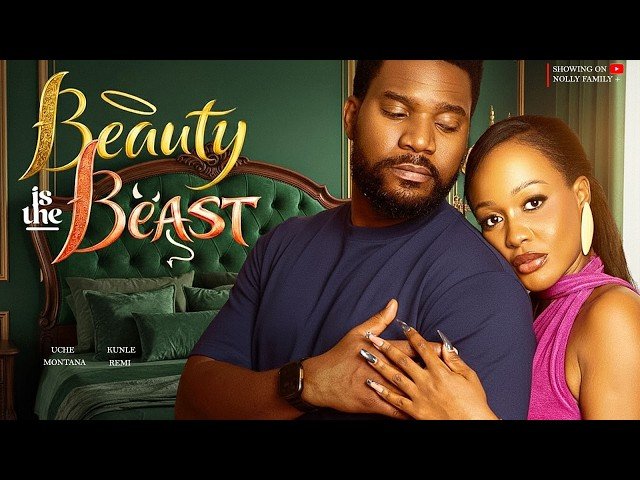
Beauty is the Beast marks an exciting entry for us, as it’s a notable first: our very first YouTube movie review in 2026. Produced by Uche Montana and directed by Tissot Nnachi, Beauty is the Beast is a romantic drama that explores love disrupted and secrets long buried. The story follows a couple whose relationship is violently shaken by maternal interference, an all-too-familiar force in many love stories, but here, it carries deeper consequences.
What initially appears to be a love story tested by external conflict soon unravels into something more complex, as the female lead’s hidden past begins to resurface. With it comes the threat of undoing everything she has tried to rebuild, forcing both characters to confront truths that could either strengthen their bond or destroy it.
Plot
Beauty is the Beast follows the story of Anthena, a bold, daring, and strikingly intelligent young woman who appears to have everything under control: beauty, confidence, and a seemingly perfect relationship with Azuka, the heir to a thriving real estate empire. Their love story unfolds smoothly, almost effortlessly, until an unannounced arrival disrupts everything.
Azuka’s mother, a formidable businesswoman who built her empire from the ground up, arrives unexpectedly and immediately asserts control. From dismissing household staff without hesitation to criticising the home environment, her presence is both commanding and unsettling.
Her suspicion of Anthena is instant and unwavering. To her, Anthena is an unknown variable, someone with no visible family ties, no traceable background, and therefore, no place beside her son. As tensions rise at home, conflict also brews within the family business. A land dispute involving a government official threatens the company’s stability, prompting Azuka to bring Anthena into the corporate space as a Chief Strategy Officer.
Despite initial resistance from his mother, Anthena proves her worth, offering a solution that not only resolves the crisis but also begins to shift perceptions about her capability and value. But beneath Anthena’s polished exterior lies a carefully buried truth.
In an attempt to replace the dismissed domestic staff, two unexpected individuals enter the household: unrefined, outspoken, and seemingly out of place. What no one knows is that they are not strangers but Anthena’s own siblings, living proof of a past she has deliberately erased. Two years prior, Anthena left her humble beginnings in search of a better life, severing ties with her family along the way. Now, confronted with the reality of her origins, she is forced into a dangerous balancing act. Her siblings, unwilling to be hidden or discarded, threaten to expose her if she pushes them away, forcing Anthena to accommodate the very past she’s been running from.
As the story unfolds, layers begin to peel back on all sides. Azuka’s mother, though harsh and unyielding, is revealed to be battling a terminal illness. Her urgency is no longer just about control; it is about securing her son’s future with someone strong enough to lead beside him. Anthena, on the other hand, continues to prove her brilliance, resolving another major corporate crisis and gradually earning the older woman’s reluctant respect. Yet, trust remains fragile.
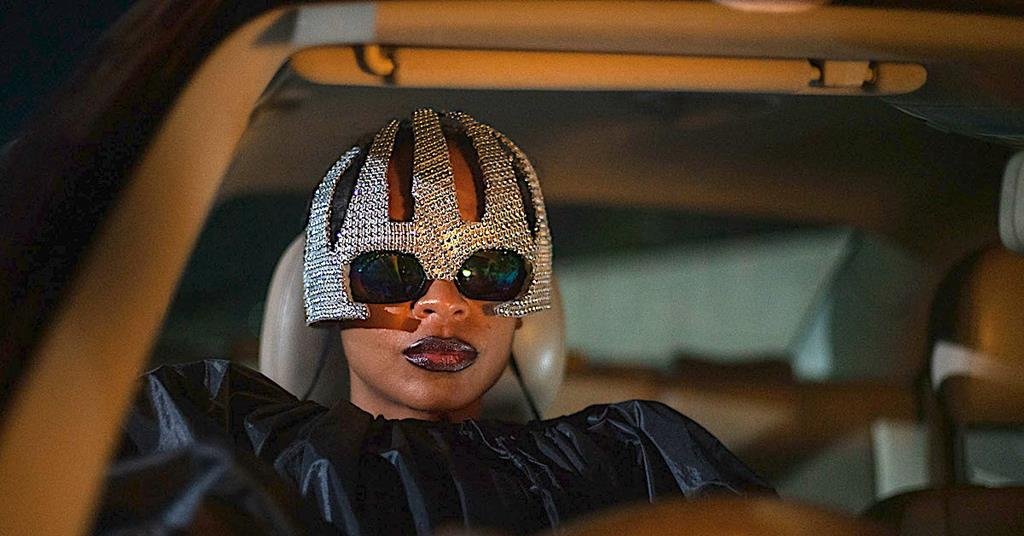
The turning point comes during a high-profile company gathering. Anthena’s past, long suppressed, violently resurfaces in the form of her ex-boyfriend, who crashes the event and exposes everything: her origins, her lies, and her carefully constructed identity.
In one moment, everything collapses.
Her relationship with Azuka fractures under the weight of betrayal. His mother, already conflicted, is forced to confront the truth she feared all along. Even the presence of Anthena’s siblings, disguised as domestic staff, becomes part of the unravelling.
In the aftermath, emotions run deep: betrayal, regret, anger, and clarity all collide. Azuka is left to grapple not only with Anthena’s deception but with a more devastating revelation: his mother’s illness, hidden from him until it is almost too late. Her final moments, marked by quiet reflection and unspoken intentions, bring the story to an emotional peak, one that forces every character to confront who they are, what they value, and what truly defines worth.
Cast
The cast of Beauty is the Beast is a carefully assembled mix of seasoned performers and vibrant screen personalities, each contributing to the film’s layered tone.
Uche Montana takes on the role of Anthena (also referred to as Moyo), delivering a performance that is both controlled and intentional. She captures the duality of her character, poised and refined on the surface, yet razz on the inside.
Kunle Remi, as Azuka, brings a calm, grounded presence to the film. His portrayal of a soft yet responsible heir adds emotional balance, especially in contrast to the stronger personalities around him.
However, it is Elvina Ibru, as Prudence (Azuka’s mother), who undeniably steals the show. Her performance is commanding, refined, and deeply convincing. She embodies the sophisticated, calculating matriarch with such ease that every scene she appears in feels elevated. Her delivery, composure, and screen authority make her the standout of the film.
On the lighter side, Samuel Banks as Lati, alongside his cohort Rufai Bukola Arike introduces a refreshing comedic layer. Their performances are lively without feeling exaggerated or out of place. Importantly, they avoid the common pitfall of turning comedic roles into mere skits; instead, they remain fully integrated into the story, making their presence both entertaining and purposeful.
Supporting performances from Rufai Bukola Arike (Fade), Anene Prince Nkem (Timothy), Jeffrey Odunze (Ebube), Sunshine Dennis (Nicole), Paul Anayo (Kester), and Luvrex Ray Yekeen (Dogo) further enrich the narrative, adding texture and continuity across different layers of the story.
Language
The film embraces a rich linguistic blend, weaving together English, Pidgin, and touches of Yoruba.
Final take
Beauty is the Beast is a film that thrives more on its storytelling than its technical execution.
Visually, the production remains modest. The settings are limited, primarily confined to a single upscale home and brief glimpses of a more modest “hood” environment. While this reflects the typical constraints of many YouTube productions, it does make the film feel somewhat enclosed, lacking the visual expansiveness that could have elevated it further.

Costume design, however, holds its own, helping to distinguish class, character, and transformation effectively. On the technical side, the film shows some weaknesses, particularly in sound design. Audio inconsistencies occasionally disrupt immersion, revealing a lack of polish in the technical departments.
That said, where the film truly redeems itself is in its plot twist. What initially presents itself as a predictable “mother-in-law versus love interest” storyline gradually evolves into something more layered and engaging. The introduction of Anthena’s past, raw, street-rooted, and deeply contrasting with her present, adds unexpected depth and intrigue.
This twist not only revitalises the story but also reframes the characters, turning what could have been a conventional drama into something far more compelling.