






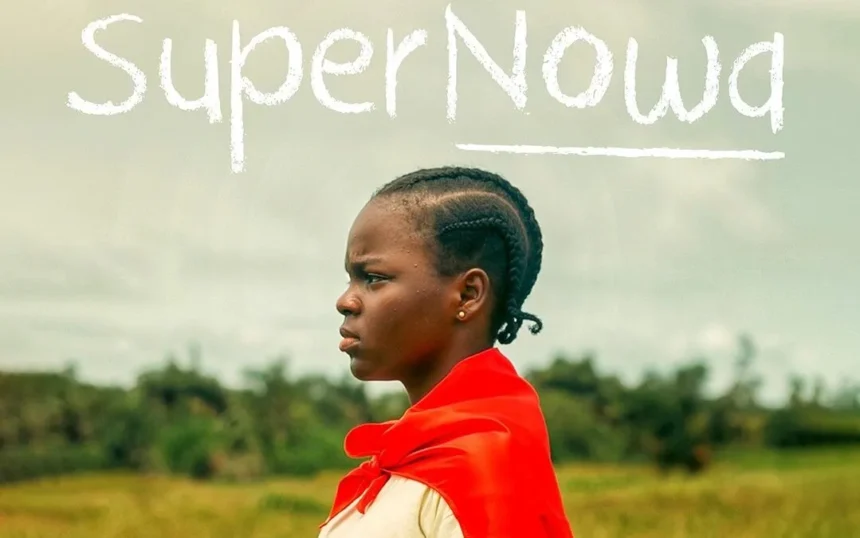
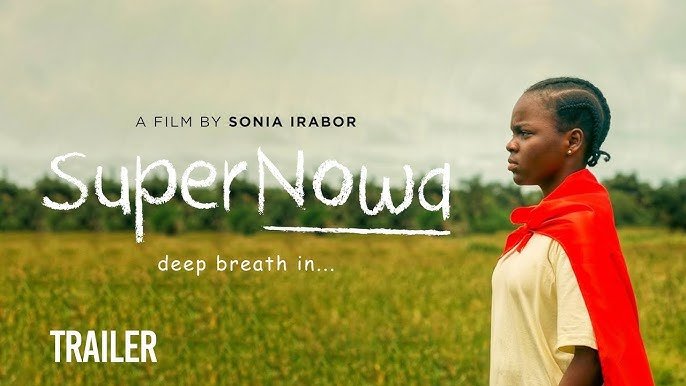
Super Nowa opens 2026 on a thoughtful note, setting the tone for what promises to be a year of more intimate, character-driven storytelling. As one of the earliest film releases of the year and our first official review for 2026, the movie arrives with quiet confidence and emotional weight.
Directed and written by Sonia Irabor, Super Nowa is a spelling-bee-themed coming-of-age story that goes beyond competition and trophies. At its heart is a young girl navigating the pressure of academic excellence while silently battling anxiety, all within the constraints of a complicated family dynamic. The film uses the familiar structure of a spelling bee not as a spectacle, but as a lens, one that magnifies fear, self-doubt, expectation, and the longing to be understood.
Plot
Super Nowa follows Nowa Ohini, a brilliant secondary school student whose exceptional spelling skills set her apart. But in Nowa’s world, intelligence comes with pressure. She is gifted, yes, but also young, anxious, and carrying emotional burdens far bigger than her age.
At home, the Ohini family is doing their best with very little margin for error. Nowa’s parents had her later in life and are caught between ageing bodies, financial strain, and dreams that did not quite pan out. Her mother holds the family together financially, hustling nonstop, while her father, Professor Ohini, a university lecturer sidelined by endless strikes, now drives a car to make ends meet. The house is filled with love, but also fatigue, tension, and worries nobody quite says out loud.
Nowa’s closest support system is her brother Jaybobbo, her protector and emotional anchor. But hovering over her life is the loss of Osas, a sister she adored and lost two years earlier. Osas exists now only in memory through flashbacks and a voice note that Nowa listens to obsessively. It is how she grieves, and it is where her fragility deepens.
School introduces a new complication. Miss Eki, an ambitious teacher with something to prove, transfers from a prestigious private school where her methods got her fired. She arrives at this public school determined to succeed at any cost. Her focus quickly locks onto a national spelling bee competition with a ₦15 millioprize andnd onto Nowa, whose talent is impossible to ignore.
The problem is tthat he school proprietress forbids participation outright. Miss Eki goes behind her back anyway. Nowa resists. Despite her brilliance, she suffers from severe performance anxiety. Whenever she faces a crowd, panic takes over, often accompanied by a haunting vision of a masked figure chasing her. It is fear, grief, and trauma rolled into one, making public performance feel impossible.
Things escalate when Nowa’s best friend secretly signs her up for the competition. At the interschool qualifiers, Nowa nearly bolts until Jaybobbo steps in. Miss Eki raises the stakes. Winning could mean state representation and national glory. For Jaybobbo, whose life is defined by near wins and failed breakthroughs, this feels like their one real shot.
Nowa’s first major showdown is against Conrad School, the elite team Miss Eki once coached and the strongest contenders in the state. As the deciding word approaches, Nowa panics and runs but still manages to spell correctly and qualify.
The victory comes with consequences. Jaybobbo, fresh from yet another failed job interview, snaps and projects his frustration onto Nowa, insisting the family’s future now rests on her success. Miss Eki piles on, too, because the competition has become her redemption story. Nowa is crushed under the weight of their expectations.

At the next round, the pressure finally breaks her. She runs off mid-competition.n. This time, Miss Eki truly sees the truth. Not fear. Not stubbornness. Panic attacks. She pulls Nowa out and takes her home, choosing the child over the trophy. The choice costs her her job.
Everything begins to unravel. Jaybobbo spirals. Miss Eki faces rejection again. Nowa runs away from home and disappears for hours until Jaybobbo finds her in their childhood safe space, a garden where they once planted with Osas. There, the truth finally spills and healing begins.
When Miss Eki returns, Nowa’s mother opens up about her own unresolved grief, admitting how Osas’ death left Nowa emotionally neglected. Then comes one final twist. Nowa has qualified for the finals after all, and Miss Eki is reinstated.
At the final competition, Nowa steps on stage with her family fully behind her. No pressure. Just support. The panic returns. The masquerade appears.
But this time, Nowa does not run.
She faces it and realises it was Osas all along. No chasing. Just waiting. Nowa says goodbye, holds her sister one last time, and spells the final word. She wins.
Cast
At the heart of Super Nowa is a carefully assembled cast that understands restraint, vulnerability, and emotional timing. qualities the story demands.
Darasimi Nadi carries the film with quiet strength as Nowa Ohini, delivering a performance that never overplays its hand. Her portrayal captures the contradictions of childhood brilliance and emotional fragility with impressive control. As Noah, Darasimi communicates anxiety, grief, and courage not through grand speeches, but through pauses, silences, and body language, making her performance deeply affecting and believable.
Nonzo Bassey shines as Junior Ohini (Jaybobbo), Nowa’s older brother and emotional counterweight. His performance is layered with frustration, tenderness, and wounded pride. As Miss Eki Idehen, Onyinye Odokoro delivers one of the film’s most complex performances. Ambitious, flawed, and emotionally conflicted, Miss Eki is neither villain nor saviour, and Onyinye leans fully into that grey area. She balances drive with vulnerability, allowing the character’s need for validation to feel human rather than selfish.

Though her character exists largely through memory, Bimbo Manuel leaves a quiet imprint as Osaze Ohini. Appearing in flashbacks and psychological visions, her presence anchors Noah’s grief and gives emotional shape to the masquerade imagery that runs through the film.
The Ohini parents are portrayed with warmth and realism. Carol King as Ndali Ohini embodies maternal exhaustion and unresolved grief with subtle honesty, while Etta Jomaria as Osas Ohini (Professor Ohini) captures the quiet humiliation and resilience of a man stripped of professional stability. Together, they ground the family’s struggles in recognisable, lived-in performances.
Supporting siblings and cast include Alife Ikwang, Korede Lawal, Anabel Thaddeus and Peter Ohini and also Harriet Akinola, Regina Adekunle, round out the household with natural chemistry, reinforcing the sense of a crowded but emotionally distant family.
Language
The film is predominantly in English, with subtle touches of the Bini language woven in.
Final take
Super Nowa is one of those films that quietly does its job well and then does a little extra. From cast to costume, from props to setting, the film is deliberate and thoughtful in ways that matter.
Visually, the attention to detail is impressive. The Ohini family home feels lived-in, warm, cramped, slightly tired, and very Nigerian. Nothing feels staged or overly polished. The choice of locations works in the film’s favour, grounding the story so well that at no point do you feel like you’re watching a “set.” It feels like someone’s real house. Someone’s real life.
The costume design deserves special praise, especially Nowa’s wardrobe. Her clothes are modest, practical, and completely in tune with the family’s financial reality. Nothing feels forced or performative. She looks like a real secondary school student from a struggling household. not a character dressed for the camera. That realism quietly strengthens the story.
Performance-wise, the cast is solid across the board. The adults are seasoned and grounded, while the younger actors hold their own convincingly. Most notably, the film makes it clear that its young lead is a talent in bloom. Watching Nowa on screen feels less like watching a child act and more like watching someone slowly grow into her craft. It’s promising and genuinely exciting.

Plot-wise, Super Nowa resists the temptation to be a straightforward spelling-bee movie. Yes, the competition drives the narrative, but the film’s real interest lies in its layers, particularly its portrayal of anxiety. Noah’s panic attacks are handled with care, avoiding exaggeration or mockery. The masquerade imagery is unsettling without being overdone, and it effectively visualises fear, grief, and emotional paralysis.
That said, the film isn’t without its soft spots. The death of Osaze—a character who is central despite her physical absence, could have been explored more clearly. Given how much emotional weight she carries, a deeper explanation of the events surrounding her death might have strengthened the audience’s understanding. At the same time, the decision to keep parts of her story unseen also adds to the film’s emotional texture, allowing grief to feel abstract, lingering, and unresolved, much like it is in real life. It’s a choice that both works and slightly limits the narrative.
Still, these are minor blemishes on an otherwise well-crafted film.
Overall, Super Nowa is grounded, sincere, and emotionally aware. It succeeds not because it tries to be loud or grand, but because it chooses honesty. In its performances, its visuals, and its storytelling, the film understands that sometimes the most powerful stories are the ones told softly.
A strong start to the year and a film that stays with you longer than expected.