







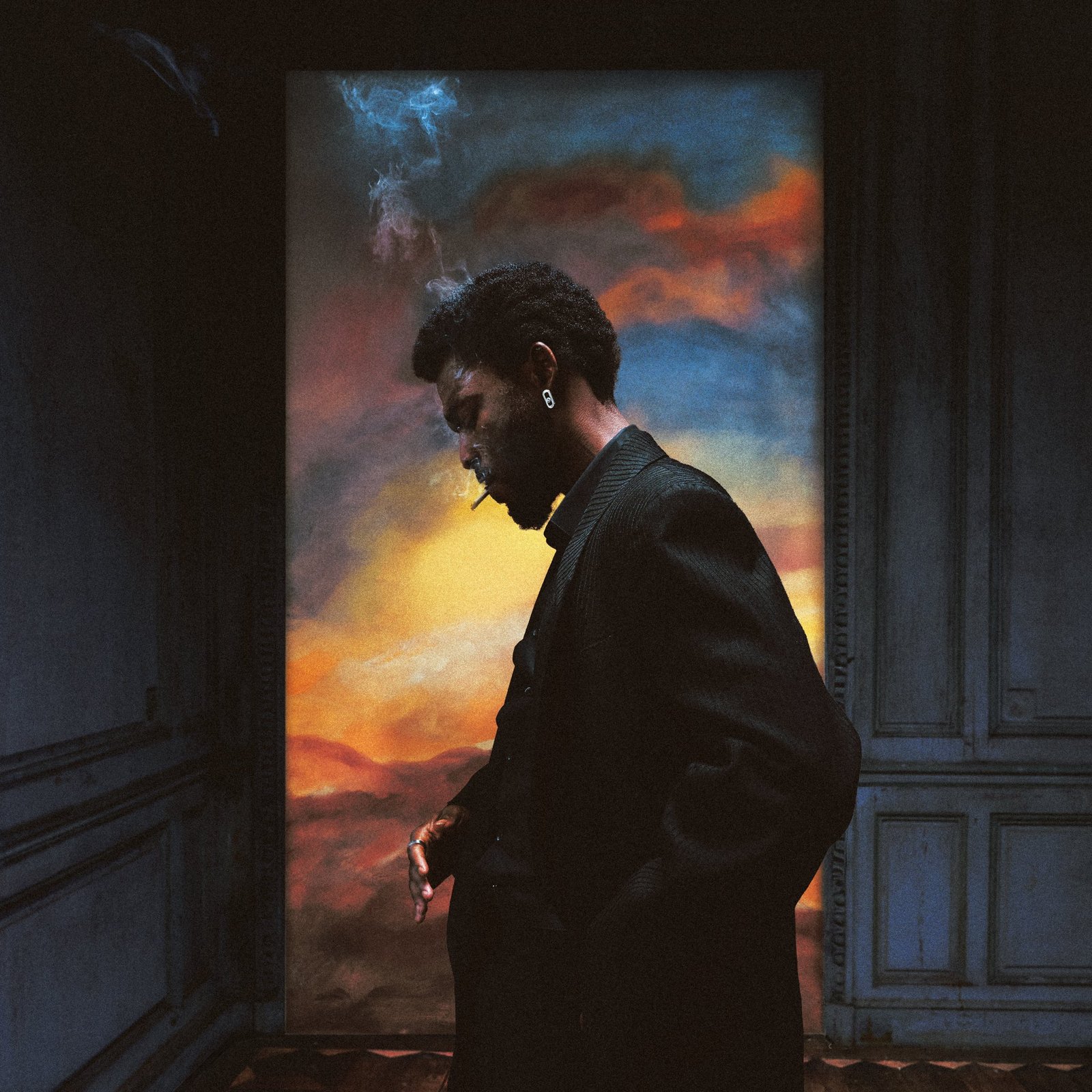
On April 3, 2026, Grammy-nominated Nigerian megastar Omah Lay released Clarity Of Mind, his long-awaited sophomore album. The album arrives four years after his critically and commercially acclaimed debut album, Boy Alone.
On his debut album, Omah Lay painted the portrait of a young man coming to terms with the perks and struggles of his new reality while grappling with loneliness, fear and doubt, often having to indulge in excessive quantities of alcohol and marijuana in a bid to cope. The album was a deeply personal offering as Omah Lay wielded his pen to brilliant effect as he captured the complexities and chaos of being young and successful.
In the four years between Boy Alone and his latest offering, Clarity of Mind, Omah Lay was on a journey of self-discovery. As he revealed at the album’s listening party in Lagos, his struggle to find peace forced him to take a break from everything to focus on himself, his family and what is ‘real.’ And as a result of that process, he realised that he was fine as he was. Hence, he began to love himself even more.
This revelation, as well as the title of the album, would then imply that Omah Lay has moved past the confusion and chaos of Boy Alone to arrive at a place of understanding and resolution. And with such understanding comes a noticeable shift in creative confidence, which Omah Lay displayed when he declared himself the greatest of his generation in 2025. A bold claim he has repeated several times over during the course of the rollout of this album. He reflects this confidence across the album with lyrics like “I don’t see anyone / Wey fit come close to me / All of them know / Nobody be my mate” on the opener ‘Artificial Happiness’. On ‘I Am’, he sings “Nobody vibe like I am / Nobody do it like I am”.
However, clarity for Omah Lay doesn’t translate to transformation; it’s simply self-awareness without correction. He is a man who has not resolved his contradictions; he only accepts them and learns to live with them.

Across the 12 tracks on this album, Omah Lay defines himself. He presents a version of himself that leans into his contradictions and confronts both his vices and his values without shame. “I am who I am,” he sings repeatedly on the Lekaa Beats-produced I Am. The record feels like the result of his four years of self-discovery as he accepts and reinforces what he already knows. He captures this reality on the record singing “Everybody know say smoking is dangerous / But once I see marijuana I go light am”, the clearest expression of clarity on this album. He is not unaware or confused. He is fully conscious of the contradiction but continues anyway. He is not searching for identity; he is asserting it, and everything else flows from this.
It shapes his approach to relationships and intimacy, as exemplified on the melancholic Don’t Love Me where he sternly warns a potential love interest not to love him. “Tell Bisi make she no wait for me”, he goes further on Jah Jah Knows. He understands he is incapable of healthy love, and rather than work on it, he accepts it and asks others to do the same. Yet, this understanding of emotional unavailability does not stop him from longing for ‘Julia’ even though he would prefer being alone. And when intimacy does happen, it’s casual as evidenced by lyrics like “There is a tendency say tonight you will be mine / There is a tendency say tomorrow you will not” on Mary Go Round. Yet, he doesn’t hide his love for a woman’s vagina as he sings “I’ve been searching for ages / Nothing sweet like kpetus / The way I love am Jesu / I cannot say bye bye.” He details his love for it more explicitly in the sultry Water Spirit, a song purely about sex brilliantly wrapped in spiritual imagery.
This same acceptance extends to his relationship with his vices. On Boy Alone, his use of substances was simply as a coping mechanism. On this album, he presents it as a part of him. “Ígbo is telling on me / I like what it’s saying make I no stop” he sings on the opener, ‘Artificial Happiness’, fully aware of its dangerous tendencies as evidenced by lines like “One backy don swallow all my cana / Now I dey see things upside down upside down” on Canada Breeze, but choosing to indulge because the feeling is desirable.
Beneath the excessive indulgence and emotional unavailability lies the unhappiness that drives it. “Unhappiness is hurting me / I can’t feel my shoulders anymore,” he sings on the standout track Coping Mechanism, which features the talented Elmah, whom he christened the princess of Afrobeats at his listening party. She provides him with a shoulder to lean on and offers him companionship. While it’ll take more than the spectacular hook she delivers on this record to back up his claims, she gives a good impression of herself.
Yet, despite the clarity, some questions remain unanswered. “As you see me I no dey too sure / I don’t know what to do with my life” he admits on Jah Jah Knows. But resolution doesn’t always mean answers. Occasionally, it means peace with the questions. Omah Lay doesn’t arrive at certainty; he only arrives at a more honest relationship with himself.
Tempoe is the chief architect of the sound of Clarity of Mind, producing 7 out of the 12 songs on this album, with Lekaa Beats contributing to producing 3 records, including the standout ‘I Am’. Together, they provide the mid-tempo Afropop sound that suits Omah Lay’s ‘mumble-sung’ delivery. Yet, this album is more experimental than most people realise.
Highlife meets Gyration on Canada Breeze while deploying an infectious yet subtle twangy guitar borrowed from Western country music. Julia is folk-rock, while I Am is a fusion of EDM and Afro-tech with slight elements of rock. The electric guitars on the former are just absolute madness. Don’t Love Me is an Afropop song with trap elements. Waist, Holy Ghost and Amen see Omah Lay venturing into House and Amapiano territory, making for a sonically expansive body of work.
Like Boy Alone, this album has elements that suggest the album was crafted with foreign markets in mind, even though the album is rooted in Afropop. The significant distinction, however, is that on Boy Alone, Omah Lay employed a minimalist approach to the point where the production almost felt insufficient, all in a bid to ensure his message was not encroached upon. The production on this album is noticeably more pronounced, most likely because the topical conversations on this album were more constrained.
Final Thoughts:
In an interview with Nandoleaks, right before the album’s release, Omah Lay said confidently that Clarity of Mind is the greatest Afrobeats album of all time. If you choose to judge this album off the back of those claims, then the album may fall short of those lofty expectations, as the bar for the greatest Afrobeats albums of all time has been set very high.

However, in itself, Clarity of Mind is a fine record that offers sublime craftsmanship, rich melodies and astute songwriting. While the album often revisits the same idea from multiple angles, with Omah Lay finding different ways to communicate the same idea, this is not because he lacks depth, but because assertion sometimes needs repetition.
In the end, Clarity of mind sees Omah Lay operating with much more creative confidence and clarity of voice, revealing a truer, more distilled version of the artist. It is a well-crafted album with a defined idea that holds everything together. It does what it sets out to do very well. This album will do well to support his claim that he is the greatest of his generation.