






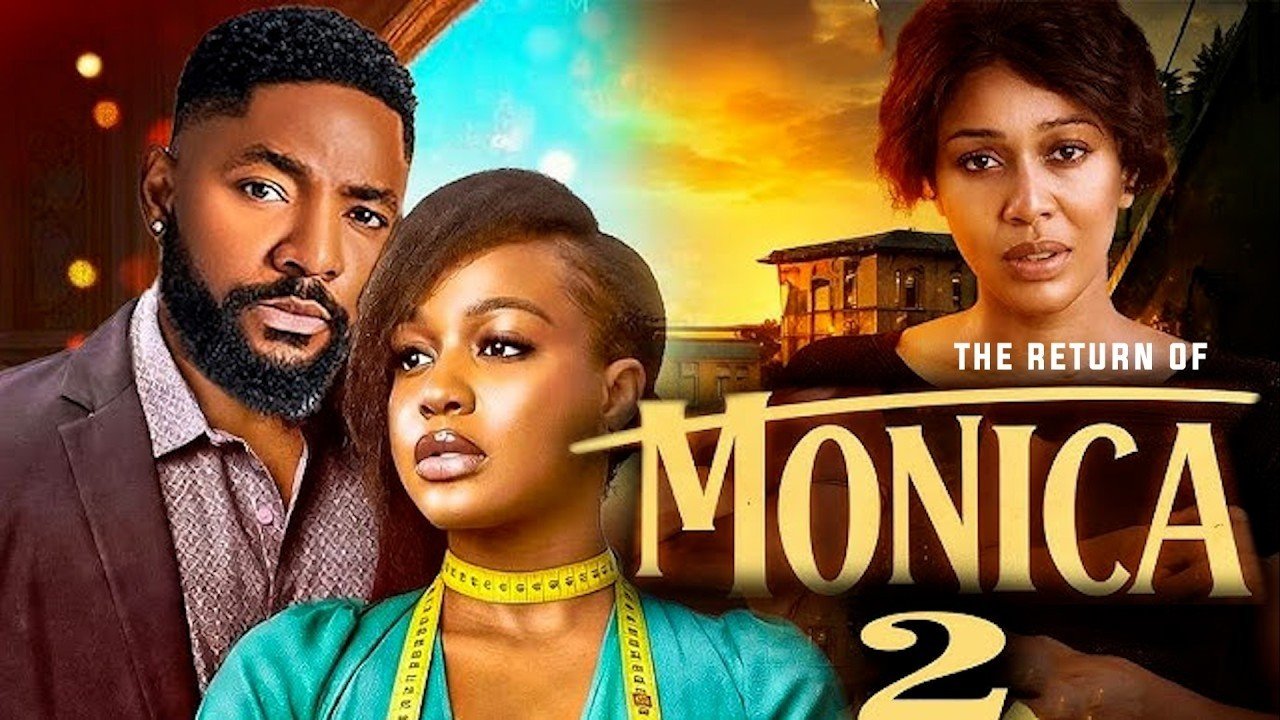
Monica is a recently released YouTube drama on Uche Montana Media that has quickly stirred conversations online. Produced by Uche Montana and directed by Omoruyi Efosa Emmanuel, the film dives into the harsh realities of sacrifice, family loyalty, and silent suffering.
At its core, Monica tells the story of a young woman burdened by responsibility, caught between her own dreams and the weight of expectations placed on her. It explores themes of injustice within the family system, emotional neglect, and the difficult question: does sacrifice always lead to reward?
Plot
Monica is the first child in a struggling family of five, growing up in poverty alongside her parents and younger twin siblings. To support the household, she joins her mother in selling pap every morning before heading to school. Despite being bright and promising, Monica is forced to drop out in SS2 to help provide for the family, sacrificing her education so her siblings can have a better future.
As the years pass, her sacrifices go unnoticed, and worse, unappreciated. Her younger siblings, now more educated, begin to look down on her as an illiterate, reducing her worth to her lack of formal education.
Monica works tirelessly as a tailoring apprentice, doing everything she can to keep the family afloat. Yet, within her own home, she faces constant emotional neglect. Her mother is controlling and self-serving, often manipulating situations to her advantage, while her father remains passive, choosing silence over confrontation in the name of peace.
Amidst this hardship, Monica finds love in Pascal, a hardworking young man who genuinely cares for her and sees her value. Their connection offers a glimpse of hope and escape from her difficult reality. When Pascal supports her with money to start her tailoring business, it seems like a turning point.
However, her mother intervenes once again, pressuring Monica to redirect the money toward her siblings’ needs. When she discovers Ifeanyi’s intentions to marry Monica, she strongly opposes the relationship, insisting that Monica’s duty lies with the family. Torn between love and obligation, Monica chooses her family, breaking Pascal’s heart and her own in the process, even as he reveals plans to travel to the United States.
Years later, the consequences of Monica’s sacrifices become even more pronounced. Her younger sister, Chika, completes her education and secures a job at a bank, while their brother is unable to finish school and becomes a dropout. Meanwhile, Monica remains in the same tailoring shop, still working tirelessly with little progress of her own.

A turning point comes when her madam announces she will be travelling abroad to join her husband, leaving the shop under Monica’s care. For the first time in a long while, Monica glimpses independence and growth.
However, that hope is quickly overshadowed at home. Monica discovers that Chika, now earning, spends lavishly on herself, most notably on an expensive new iPhone, without contributing to the family’s needs. When Monica questions this, she is harshly shut down by their mother, who mocks her for choosing a life of sacrifice and insists Chika has every right to enjoy her earnings.
The emotional blow deepens when Monica returns home one day to meet an unexpected visitor, her former lover, Pascal. For a brief moment, she believes he has come back for her. Instead, she is confronted with a painful reality: Pascal is engaged to her younger sister, Chika.
The story then flashes back to reveal how this betrayal unfolded. Upon returning from abroad, Pascal visits Monica’s home in her absence and meets Chika, who paints a dismissive and unflattering picture of her sister, claiming Monica has no ambition and remains stuck in the same place. Misled and disillusioned, Pascal gradually grows close to Chika, and their relationship evolves into marriage.
Heartbroken and abandoned, Monica looks to her parents for support, but neither intervenes. Eventually, persuaded by her father, she chooses the path of forgiveness and gives her blessing to the union, despite her pain.
As if her circumstances could not worsen, her brother impregnates a young woman and brings her into the already-strained household. Monica, ever selfless, sacrifices her own comfort by sharing her room with the new addition. But this kindness is met with hostility, as the young woman begins to make life increasingly difficult for her.
Pushed to her limits, Monica finally leaves home and returns fully to the tailoring shop, choosing distance over continued emotional strain.
In a surprising turn of events, her former madam returns after years abroad with life-changing news: she intends to take Monica with her overseas. The film ends on this note of uncertain hope, leaving viewers to question whether this is finally Monica’s long-awaited breakthrough.
Cast
Monica is anchored by Uche Montana, who delivers a grounded and emotionally resonant performance as Monica. She captures the quiet strength, pain, and endurance of the character with notable skill.
However, special recognition goes to the Okorie Emmanuella actress who portrayed Monica as a child. Her performance is strikingly natural, expressive, and emotionally convincing, arguably one of the standout elements of the film.
The supporting cast, particularly the actors who played the mother and Chika, Blessing Onwukwe and Ekene Onochie, executed their roles effectively, embodying their characters with enough conviction to drive the story’s emotional tension. Other notable casts include John Ekanem, Chris Biyibi, Prince Buchi and others.
Language
The film makes effective use of a blend of English and Pidgin English, which adds authenticity to its setting.
Final take
Monica excels in its costume design, casting, and setting. The visuals feel lived-in and authentic; from the modest environments to the characters’ appearances, everything reflects a believable socioeconomic reality. The attention to detail, particularly in portraying Monica’s physical transformation over time, adds depth to the storytelling.
However, while the film is emotionally powerful, its narrative leans heavily on continuous hardship and pain. The story often feels like a deliberate attempt to amplify sadness, with one misfortune following another. Although this resonates with audiences, many of whom can relate and have shared similar experiences, it also makes the plot somewhat predictable.
A stronger narrative structure with more nuanced developments or unexpected turns could have elevated the film beyond being just a sequence of emotional setbacks.
Ultimately, Monica is an engaging and relatable film that connects deeply on an emotional level, even if its storytelling lacks complexity. It is a story that reflects real-life struggles, sacrifice, and resilience but one that could have benefited from a more balanced and less predictable plot.