





The 2025 Africa Cup of Nations (AFCON), hosted by the Kingdom of Morocco, was more than a football tournament. It became a defining moment for African excellence, resilience, and unity. As discussions continue around what many consider the most ambitious edition in the competition’s 68-year history, AFCON 2025 stood out for how decisively it reshaped perceptions of African football on the global stage.
From infrastructure and commercial growth to fan culture, including the Democratic Republic of Congo’s Patrice Lumumba being honoured by a fan in the stands, the tournament demonstrated what is possible when long-term planning meets continental ambition.
Drawing from analysis and post-tournament assessments, we highlight seven achievements that defined AFCON 2025 and explain why it will be remembered as a landmark edition.
Morocco set a new standard for hosting
Morocco did not simply host AFCON 2025; it raised the bar for what a pan-African sporting event can look like. The tournament was staged across nine modern stadiums in cities including Casablanca, Rabat, and Marrakech, which is the highest number of venues in AFCON history. Each stadium featured FIFA-standard facilities such as VAR systems, advanced floodlighting, and sustainability-focused designs.
Beyond the match venues, Morocco invested heavily in logistics. All 24 teams were accommodated in five-star hotels, trained on dedicated pitches, and travelled between host cities using a high-speed rail network that often allowed same-day movement between fixtures. These investments, years in the making, are expected to deliver long-term benefits for local communities and future sporting events across the continent.
AFCON reached new commercial heights
AFCON 2025 became the most commercially successful edition in the tournament’s history. Revenues reportedly increased by more than 90%, supported by a record 23 sponsors spanning global brands and leading African companies. Media rights were also expanded into new markets, including parts of Asia and South America.

Sponsorship figures exceeded €300 million, reflecting the growing international appetite for African football. Beyond profitability, these gains are expected to support grassroots development, youth academies, and domestic football structures, reinforcing AFCON’s role as both a cultural and economic engine.
Fans turned the tournament into a continental celebration
Attendance figures reached historic levels. More than 729,000 fans attended group-stage matches alone, with stadiums operating at near capacity throughout the competition. The final at Stade Mohammed V attracted 66,526 spectators, setting a new benchmark for AFCON finals.
A DRC fan, Kuka Maldinga, stood with his right hand up throughout his country’s games at the AFCON 2025 in honour of the former Prime Minister of the Democratic Republic of Congo, Patrice Lumumba.
#AFCON2025 memories we won't forget!
— 𝕏 Ghana 🇬🇭 (@xghana_) January 16, 2026
– Kuka Muladinga stood upright throughout DR Congo's matches as a tribute to Patrice Lumumba, the former Prime Minister of the Democratic Republic of the Congo. pic.twitter.com/6PSAGrU7rx
Equally significant was the atmosphere around the games. Fan zones became meeting points for supporters from across the continent, while Morocco’s cultural programming — from music to food — added to the sense of shared identity. AFCON 2025 reinforced football’s ability to unite diverse nations around a common experience.
Broadcasting matched global standards
For the first time, every AFCON match was broadcast in full 4K HDR. Productions featured spidercams, drones, ultra-slow-motion replays, and more than 40 cameras per game, all delivered through locally coordinated infrastructure rather than external relays.
The result was a broadcast experience comparable to Europe’s top leagues and global sporting events. Viewership reached hundreds of millions worldwide, helping to reposition African football as both technically and commercially competitive on the world stage.
To add to this, CAF and Netflix announced they’re developing a documentary video for AFCON 2025.
The football delivered on every level
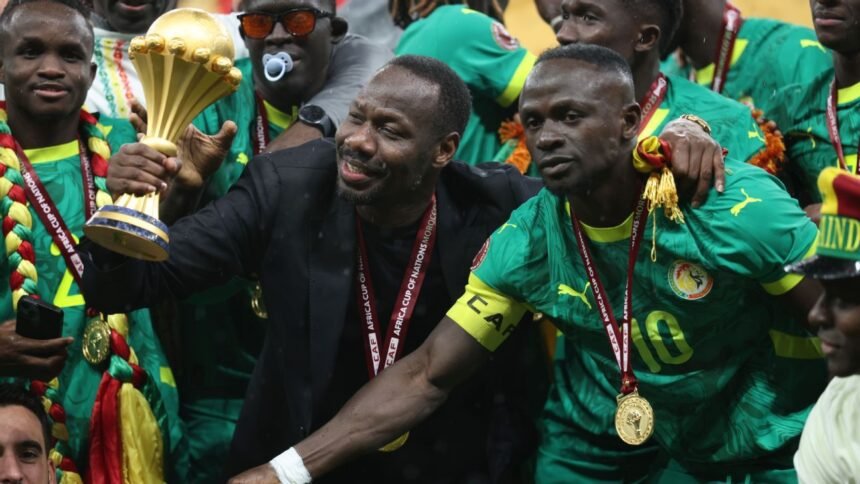
The tournament culminated in Senegal’s dramatic 1–0 extra-time victory over hosts Morocco, securing their second AFCON title. Pape Gueye’s decisive goal capped a competition defined by tactical discipline, intensity, and quality.
Individual performances stood out across the tournament. Sadio Mané was named Best Player, Brahim Díaz finished as top scorer with five goals, and Yassine Bounou earned Best Goalkeeper honours. These displays reinforced the depth of talent within African football and its growing tactical maturity.
Underdog stories carried deeper meaning
AFCON 2025 also belonged to teams that exceeded expectations. Sudan’s progression to the Round of 16 amid domestic challenges and Mozambique’s first-ever AFCON victory highlighted football’s role as a source of hope and national pride.

The tournament further encouraged diaspora players to commit to African national teams, strengthening squads and deepening connections between local football and the global African community. These stories extended AFCON’s impact beyond results and standings.
The economic impact extended beyond football
The tournament delivered a major boost to Morocco’s tourism sector, attracting between 600,000 and one million visitors. This influx contributed significantly to the economy and strengthened Morocco’s international profile, ranking third in Africa in the 2025 Global Soft Power Index.
More broadly, AFCON 2025 reinforced the tournament’s potential as a catalyst for development. From job creation to infrastructure investment, it demonstrated how football can drive lasting economic and social returns across the continent.
AFCON 2025 was not only about crowning a champion. It was about reaffirming Africa’s capacity to host, innovate, compete, and inspire — on its own terms and at the highest level.