





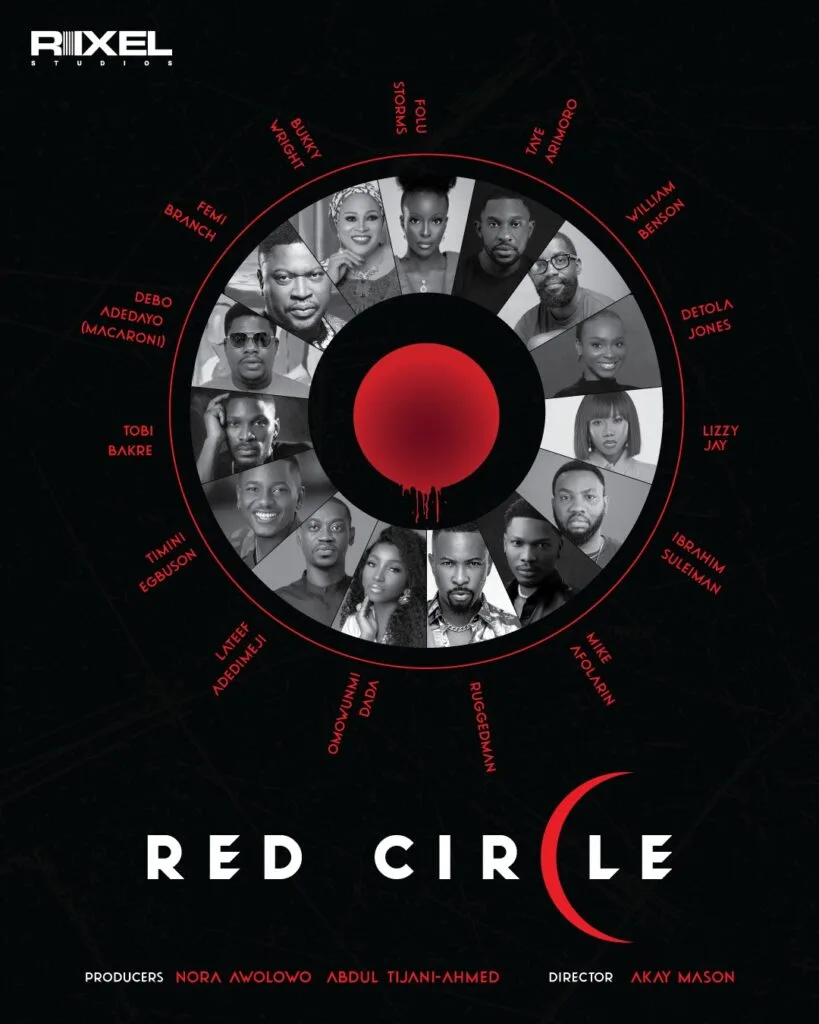
Red Circle is a crime thriller that understands one simple truth: power rarely stays clean. Premiered in June of last year and made available for streaming earlier this year, the film marks a deliberate and daring outing from director Akay Mason, who chooses not to flirt with crime but to stare it down.
Set in a society quietly governed by influence rather than law, Red Circle explores the anatomy of power, who holds it, how it is protected, and the moral rot that often festers beneath it. The film plunges into a world where the people who appear to shape order are deeply entangled in criminal dealings, and where loyalty is tested not by ideals, but by blood.
At the heart of the story is a deeply personal conflict. When the best friend of a young woman, the daughter of a highly influential man, is brutally murdered, the quest for justice begins. But justice, in this world, is never straightforward. As truths unravel, she is forced to confront a devastating possibility: the very system she is fighting against may be anchored by her own father.
Plot
Venita is a dreamer with a microphone and big ambitions. A singer chasing a breakthrough, she performs at a club one night, hoping her voice might open doors. Instead, it leads her to the wrong one. After her set, she accidentally stumbles into a private room and witnesses a chilling scene, drug deals in motion and a man on the verge of being killed.
She barely escapes. Caught peeping, Venita is chased by Mr. A, one of the men in the room. In her panic, she crashes into a stranger who introduces himself as an agent, praises her performance, and collects her number, promising to be in touch. Shaken and traumatized, Venita goes home and confides in her best friend, Fikayo Holloway.
Fikayo is everything Venita is not, a privileged “Nepo baby,” a lifestyle and fashion journalist, and the daughter of a powerful CEO. Despite their different worlds, the two are inseparable. Fikayo warns Venita to stay away from the club scene, advice she reluctantly agrees to follow. Back in the neighborhood, Venita also has Oschisco, the self-proclaimed hood king who openly adores her and calls her his wife, much to her quiet amusement. He knows Fikayo well and watches over Venita in his own way.
Meanwhile, Fikayo fights her own battles. At work, she is constantly undermined by her boss, who dismisses her as an amateur journalist and repeatedly hands her investigative leads to Mustafa, a colleague with questionable ethics. No matter how compelling her stories are, she is pushed back into fashion and lifestyle reporting. At home, her powerful father pressures her to abandon journalism altogether and join the family business, a demand she fiercely resists in her quest to define herself on her own terms.
The story takes a dark turn when Venita receives a call from a supposed music agency offering a partnership. Excited and hopeful, she is asked to return to the same club that night. What she finds instead is a trap. The “agent” is revealed to be part of Mr. A’s circle, the very men she tried to escape. Despite her pleas and insistence that she told no one, Venita is silenced. She is strangled and her body dumped into a river.
Days later, when Venita goes unreachable, a worried Fikayo attempts to report her missing, only to be turned away due to procedural delays. Fate intervenes cruelly. A body is discovered, and Detective Kalu begins an investigation to determine whether it is murder or suicide. As Fikayo arrives at the station, Kalu connects the dots. She is taken to identify the body, and her worst fear is confirmed. Venita is dead.
Venita’s death shatters Fikayo. Grief sinks her into depression, but it also ignites something fiercer, resolve. Determined to honour her friend, she writes a hard-hitting piece connecting Venita’s murder to the criminal underworld she had unknowingly crossed. Her boss, however, shuts it down immediately. Fikayo is given an ultimatum: stick to fashion and lifestyle or walk away. She refuses to be silenced.
Outside the newsroom, Fikayo finds an unlikely ally in Detective Kalu, who agrees to investigate unofficially. From a valet’s account, they learn that Vanita had entered Lounge X on the night she was killed. Acting on this lead, Kalu tips the Drug Enforcement Agency, leading to a raid on the club. Mr. A and his associates are arrested, but the victory is short-lived. The men are released almost immediately.
What follows is chilling. Mr. A and his crew are taken to a remote location, forced to kneel, and executed on the spot by a group of powerful figures who arrive in luxury vehicles. Among them are the Director-General of the Drug Enforcement Agency and Fikayo’s own father. The case is effectively buried. Every loose end is erased.
Still, Fikayo refuses to let it go. Her persistence draws dangerous attention. The DG at DEA traces the raid back to her tip-off and reports her to her father. At home, the pressure intensifies. She is ordered to quit journalism and join the family company or lose all financial support. At work, the axe finally falls, Fikayo is fired. Cornered but not defeated, she receives help from Mustafa, a colleague who reveals that a former investigative journalist, Arese, once worked on a major exposé on Lounge X before mysteriously disappearing. Following the trail, Fikayo and Detective Kalu find Arese, who hands them an unreleased file detailing drug trafficking operations and naming several CEOs and high-profile figures. One name, however, is conspicuously redacted, identified only as The Chairman.” Arese warns them never to return.
As Fikayo pushes to go public, Kalu urges caution. The risks are enormous. Before a decision is made, Mustafa calls with what he claims is another major lead. When Fikayo and Kalu arrive at the location, it’s a trap. They are gassed and knocked unconscious.
Fikayo wakes the next morning in her own bed, disoriented and in pain. Her parents insist she never left the house. Yet fragments of memory haunt her, visions of her father at the ambush site and of Detective Kalu being dragged away. She rushes to Kalu’s home and finds it completely emptied. At the station, she is told he hasn’t worked there for a long time.
The truth becomes impossible to ignore.
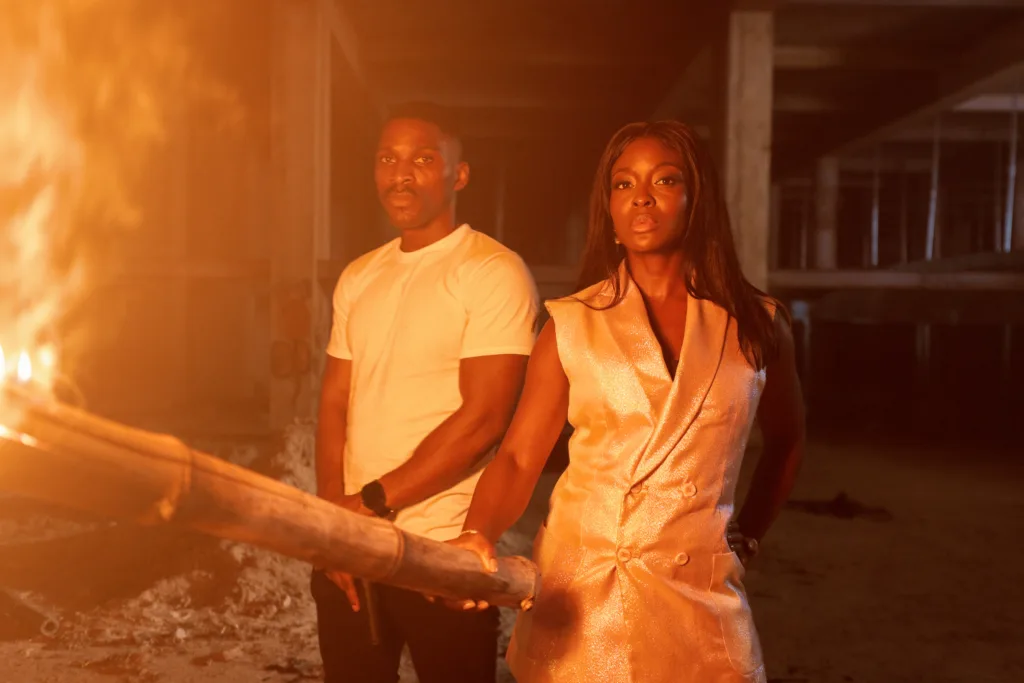
That night, Fikayo tracks Mustafa to a club, only to find him dying, poisoned. With his final breath, he confirms the nightmare: her father is the Chairman. He controls the drug network, the agency meant to fight it, and even the newspaper she once worked for. He has been at the centre of everything.
With nowhere else to turn and enemies closing in, Fikayo seeks protection from Oschisco the feared but loyal hood king. As the net tightens around her, survival becomes just as important as justice.
When Fikayo finally decides to go public, she holds nothing back. She exposes the drug trafficking network, names the powerful figures behind it, and openly accuses her father, Baba Tunde, of orchestrating crimes that include the murder of her best friend, Venita and the disappearance and presumed death of Detective Kalu. The revelation sends shockwaves through the elite. In response, Baba Tunde convenes a closed-door meeting of the powerful inner circle, the men who truly run things.
What follows is ruthless and cold. They make it clear that Fikayo has become a liability, one they are no longer willing to tolerate. Baba Tunde is given an ultimatum: he must eliminate his daughter, or risk the collapse of the entire system and his own life with it.
For the first time, the man who has controlled everything finds himself trapped. Power offers him no shield here. The question is no longer about influence, but about choice.
The film closes on a tense moral crossroads. Will Fikayo survive long enough to secure justice for Venita? Will the truth about Detective Kalu ever fully surface? And when forced to choose between blood and power, what will Baba Tunde sacrifice?
Cast
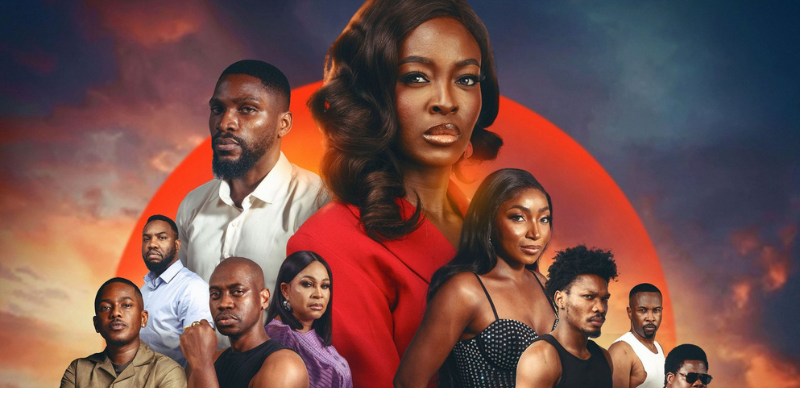
At the centre of Red Circle is Folu Storms as Fikayo Holloway, delivering a controlled yet emotionally layered performance that anchors the film. Folu plays grief, defiance, and moral courage with restraint, never overreaching even when the stakes are at their highest. Her portrayal of a woman torn between privilege and principle feels grounded and believable, especially as Fikayo evolves from a sidelined journalist into the film’s moral spine.
Bukky Wright brings quiet authority to Alhaja Adetoun Holloway, embodying the composed, observant matriarch who understands the cost of power without needing to announce it.
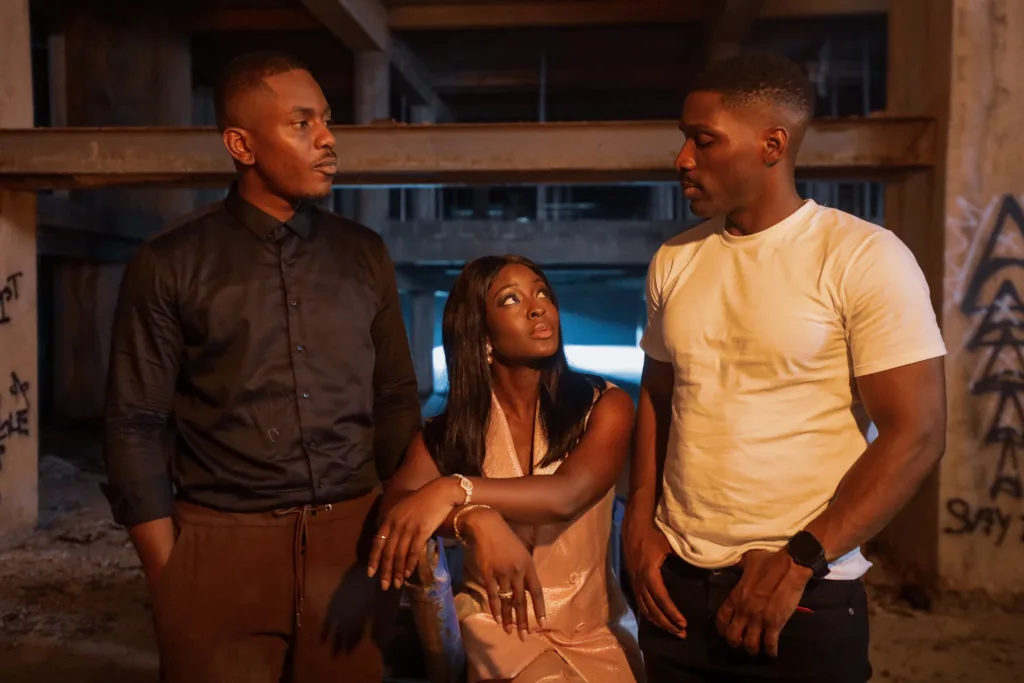
As Chief Babatunde Holloway, Femi Branch is chillingly effective. He plays power not as noise, but as certainty, measured, calm, and terrifying in its confidence. His performance thrives in restraint, making BabaTunde’s eventual moral crisis all the more compelling. This is not a cartoon villain; it is a man who believes he is untouchable until he isn’t.
Tobi Bakre brings grit, sincerity, and quiet intensity to the role, making Kalu’s pursuit of truth feel personal rather than procedural. His chemistry with Folu Storms adds emotional weight to their shared investigation and raises the stakes of his disappearance.
In Timini Egbuson’s Mustafa, we see ambition, moral compromise, and fear collide. Timini leans into the character’s opportunism without flattening him, making Mustafa’s eventual attempt at redemption feel tragically late but human.
Lateef Adedimeji shines as Oschisco the feared yet loyal street king. As Venita Momoh, Omowunmi Dada delivers a performance that lingers long after her character exits the story. She captures Venita’s vulnerability, ambition, and innocence with authenticity, making her death not just a plot device but a deeply felt loss that fuels the entire film.
The supporting cast further strengthens Read Circle’s world. Ruggedman, Debo “Mr Macaroni” Adedayo, Mike Afolarin, Taye Arimoro, Detola Jones, Ibrahim Suleiman, and Shamz Garuba, among others, each bring conviction to their roles, ensuring that no character feels wasted or underdeveloped.
Language
Red Circle keeps its language clean, natural, and very Nigerian. The dialogue feels lived-in, switching effortlessly between polished corporate speech and street-level honesty. Nothing sounds forced.
Final take
One of Red Circle’s biggest wins is how layered it is. This isn’t a film that rushes to impress; it takes its time stacking meaning on meaning. From the politics of power to family loyalty, from street justice to elite cover-ups, the story keeps unfolding in levels, and each layer lands.
Visually, the film is stunning. The picture quality is mad in the best way, clean, deliberate, and cinematic without feeling glossy or artificial. Every frame feels intentional. The lighting, especially in the club scenes and closed-door elite meetings, does heavy storytelling work, quietly reinforcing the divide between the streets and the boardrooms.
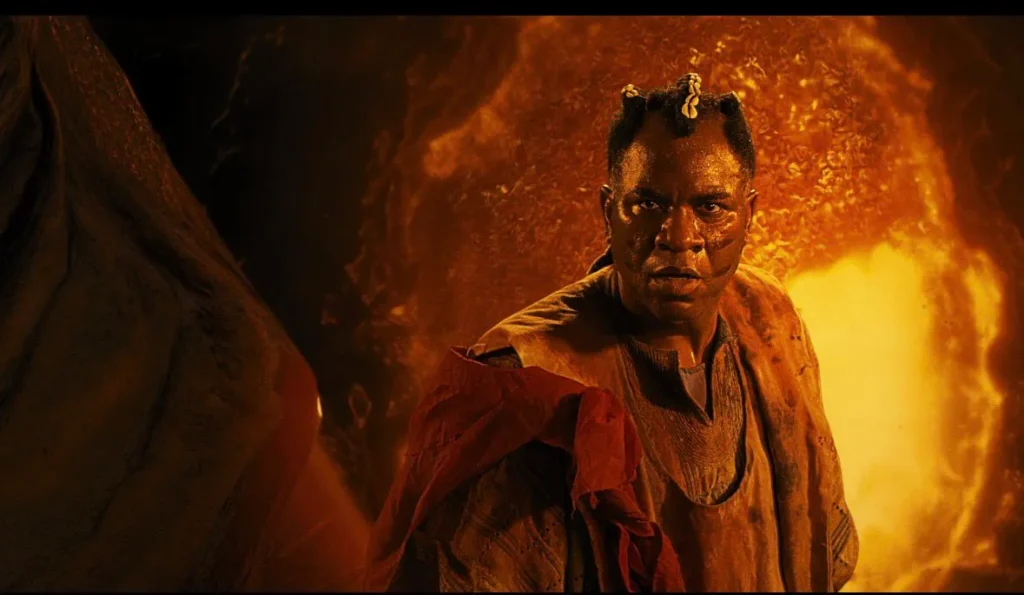
The casting is inspired, and choosing Folu Storms as Fikayo was a masterstroke. She fits the role naturally—intelligent, restrained, emotionally present. Nothing feels forced. Her performance grounds the film, making Fikayo’s journey believable even when the stakes spiral into dangerous territory. Then there’s Baba Tunde’s character arc, which is one of the most compelling in the film. Watching him “switch up” at the end doesn’t feel random, it feels earned. The slow reveal of his true nature, and the final moment where power and fatherhood collide, is chilling. It’s that Nigerian reality where influence protects evil until it doesn’t, and even then, someone pays the price.
What truly elevates the story is how Fikayo’s mother is written. She’s not loud, not dramatic, but incredibly aware. You can tell she knows more than she says. Her silence is intentional, and that restraint becomes its own arc, one that speaks volumes about survival within powerful marriages.
The costume design deserves real praise. Clothes aren’t just outfits here; they’re statements. From elite polish to street authenticity, wardrobe choices subtly tell you who belongs where and who is pretending. Nothing feels random or decorative.
The settings are another win. Oschisco’s home, in particular, feels raw and lived-in, very Nigerian, very real. It contrasts sharply with the cold luxury of Baba Tunde’s world, reinforcing the film’s core tension: the streets may be dangerous, but the real monsters wear suits.
Overall, Red Circle understands its assignment. It tells a crime story that feels local, grounded, and deeply familiar while still being bold enough to ask uncomfortable questions. It’s stylish without being shallow, emotional without being dramatic, and political without preaching.